Skip to content
BuchananLock ServicesOpen 24/7 (289) 203-1527
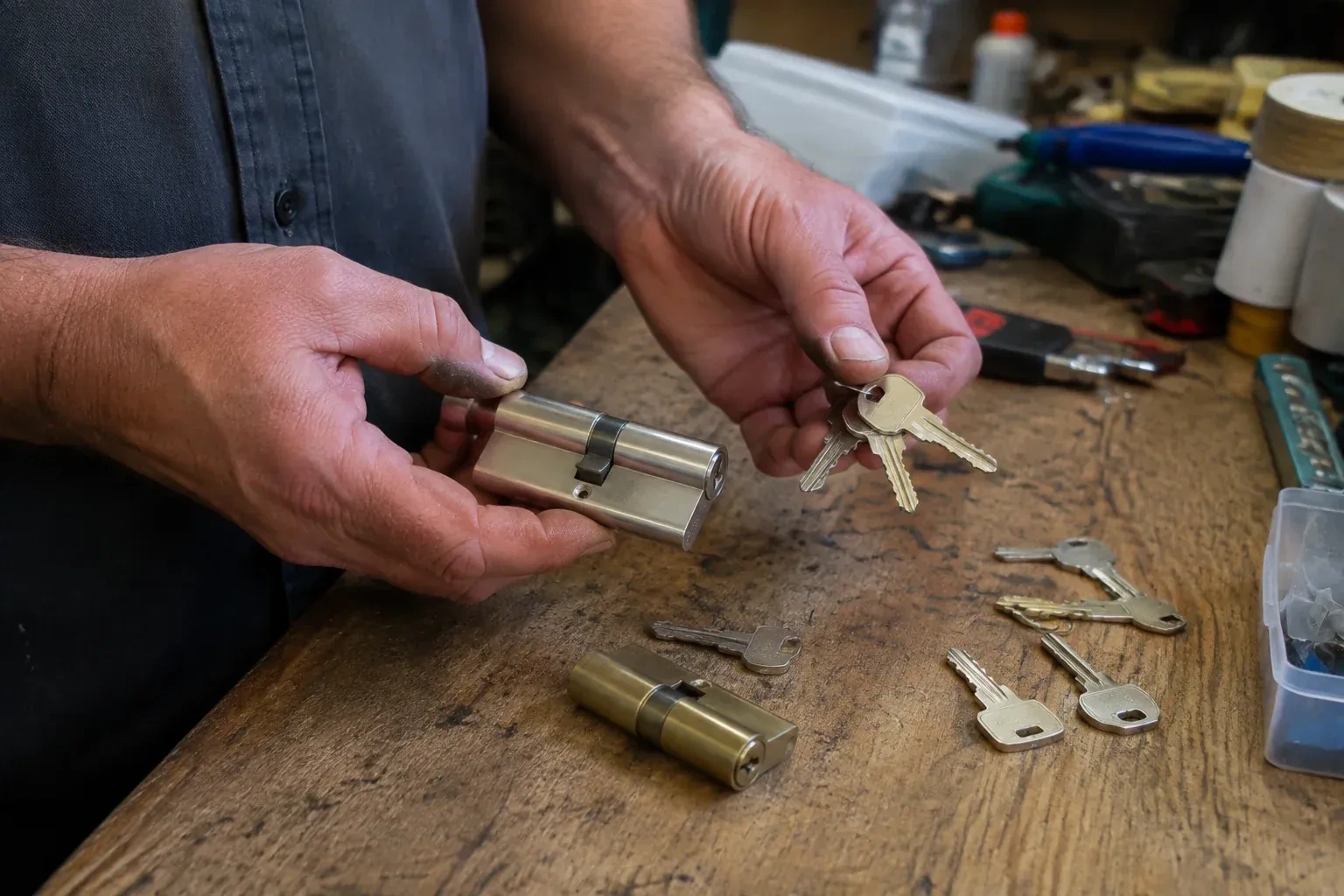
Hands holding a lock cylinder and a ring of keys above a worn workbench with another cylinder and loose keys. — Lock Rekeying, University Gardens

Change or rekey · University Gardens

Lock Rekeying

Your roommate moved out last weekend. Rent is settled, the room is empty, and the key is still on their ring.

In plain words

A rekeying visit follows a straightforward order. First the locksmith confirms you are entitled to change the locks, which for an owner is identification and for a tenant includes the landlord's agreement. Next comes a walk around the house to list every door to include, read the keyway on each cylinder and check its condition. The cylinders come out one at a time, are pinned to the new key and go back in. Every door is then tested with the new key and with the old one, spares are cut and tried in each lock, and you receive a note of what was done.

Sound familiar?University Gardens

The call
Every copy of your house key seems to work a little differently. One needs a jiggle, another sticks halfway, and the original wore down years ago. The lock itself is fine; the keys have drifted so far from each other that none fits cleanly.
NextHow the visit goes

Lock Rekeying · University Gardens

How the visit goes

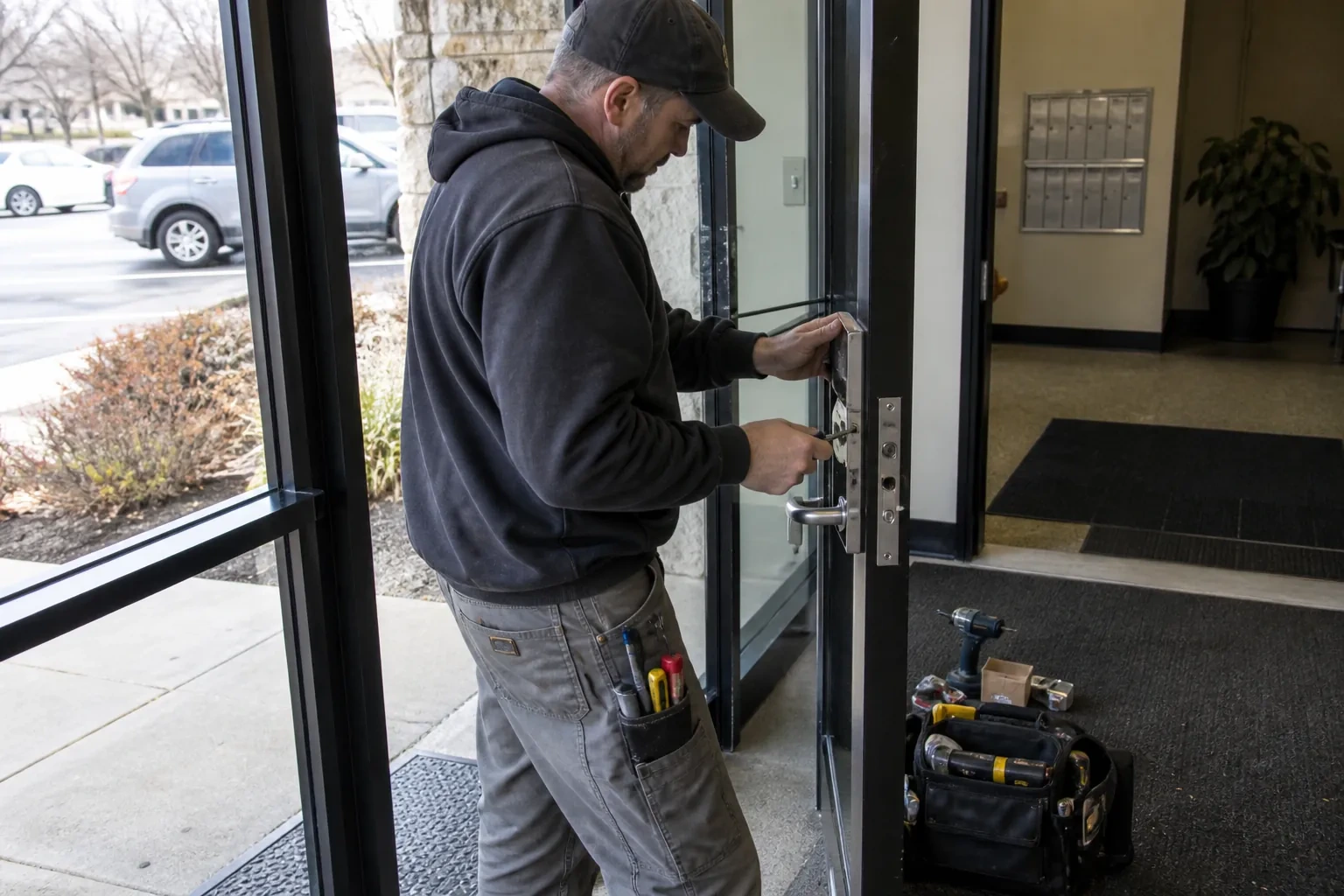
Technician in a cap and hooded sweatshirt using a small screwdriver on the lever handle and lock case of a glass door. — University Gardens
  1. Scene 1

    Deciding the key groups

    Not every door in a home needs to answer to the same key, and the plan is written down before work starts. Most households want the exterior doors keyed alike so one key does everything. Some want exceptions: a basement suite on its own key, a home office or a storage room that visitors should not enter, a shed on a separate key that can be lent out without exposing the house. The locksmith sketches the groups with you, notes how many keys each group needs and who will hold them, and only then begins removing cylinders. Getting this straight first means no cylinder is pinned twice.

  2. Scene 2

    Proving the old keys are finished

    The last operation at every door is the test that matters most. The locksmith turns the new key from outside and inside with the door open, then closed, and confirms the bolt throws fully and draws back cleanly. Then the old key is tried in the same cylinder and must turn nothing. This is repeated at every rekeyed door, because the door that gets skipped is the one an old key still opens. Spares cut from the new pinning are tried in every lock they are meant for. The old keys, now just shaped brass, are collected or handed back to you for the recycling bin.

  3. Scene 3

    Knowing when to rekey again

    Rekeying is not a once-in-a-lifetime event; it is a habit tied to changes in who holds keys. The moments to think about it are the same ones that brought you here: a move, a tenant or roommate change, a key lost with anything identifying the address, a contractor who has finished, or a relationship that has ended. Between those events there is nothing to schedule. Because the house is now on a known system with a record, a later rekey is a shorter visit, and any new lock you add along the way can be pinned to the existing key so the household never drifts back to a ring full of mismatched keys.

In the van

  • Replacement cylinder for odd keyways
  • Plug follower
  • Key blanks
  • Dry graphite or PTFE lubricant
  • Key tags and keying record

What shapes the quoteBuchanan Lock Services

Interior doors added to the plan
Bedroom, office or storage-room locks brought onto a key are lighter work than exterior deadbolts, but each is still a cylinder to pin and test, and the count includes them.
Number of keys cut
Keys are cut and tested individually, so the total depends on how many the household or the tenants need. Say the number when you book and the quote reflects it from the start.
Records, tags and labelled key sets
A homeowner needs a short note. A property manager may want a keying chart, tagged sets for each suite and a key-issuance log, which is more office work and is quoted as such.

FeesSame any hour

Have it ready

Before you call · 0 / 3

(289) 203-1527

What to expect, answered

Do the old keys really stop working?

Yes, at every cylinder that was rekeyed. Once the bottom pins are changed, a key cut to the old combination lifts them to the wrong heights and the plug will not turn. The locksmith proves this at each door by trying the old key after the new one, because any door missed from the list would still answer to the old key. That is also why the walk around the property at the start matters: every door meant to be included has to be on the list.

What exactly does rekeying a lock change?

What changes depends on the cylinder. Many locks turn when a row of small bottom pins lines up at a precise level, set by the cuts on your key, and during a rekey the locksmith tips those pins out and loads a set that lines up with a different key, cut new for you; some residential cylinders instead reset a side-locking bar without removing any pins. From then on the new key operates the lock and older keys do not, and the hardware on the door stays as it was.

How many new keys will I get, and can I get more later?

As many as you ask for, cut on site from the fresh pinning and tested in each door they should open; two or three is typical for a household. More can be cut later. When you do, bring one of the locksmith's originals to be copied rather than a copy of a copy, since every generation strays slightly from the intended depths. If any key is a restricted type, additional copies come from the record kept for that system rather than from a hardware store.

University Gardensinformation

HamiltonOntario

Town
University Gardens, Hamilton
In business
15 years
Hours
Open 24/7
Nights, weekends and holidays, same fees
Visits
On-site assessment preferred. Request a visit or call.

2021 census: what it means at the door

Every square is one home in a hundred.

  • 61 in 100 homes · older homes
  • About 61% of homes in Hamilton were built in 1980 or earlier, according to the 2021 Census.Basement and side entries on older homes were often fitted long after the house was built, with whatever lock was on hand. Bringing those doors up to the standard of the front entry, and onto the same key, is a common and satisfying job.
  • Single-detached houses make up about 56% of homes in Hamilton (2021 Census).Where housing is mixed, the same street can hold a solid wood front door, a steel townhouse door and a metal-clad suite door. A locksmith fits each with hardware suited to its construction, so every neighbour ends up with a door that locks properly.

Source: Statistics Canada, Census Profile

Open University Gardens in Google Maps

On-site assessment

Request a visit.

Your roommate moved out last weekend.

(289) 203-1527, open 24/7.