Locksmith in Hamilton, OntarioCondo doors, handled with care.
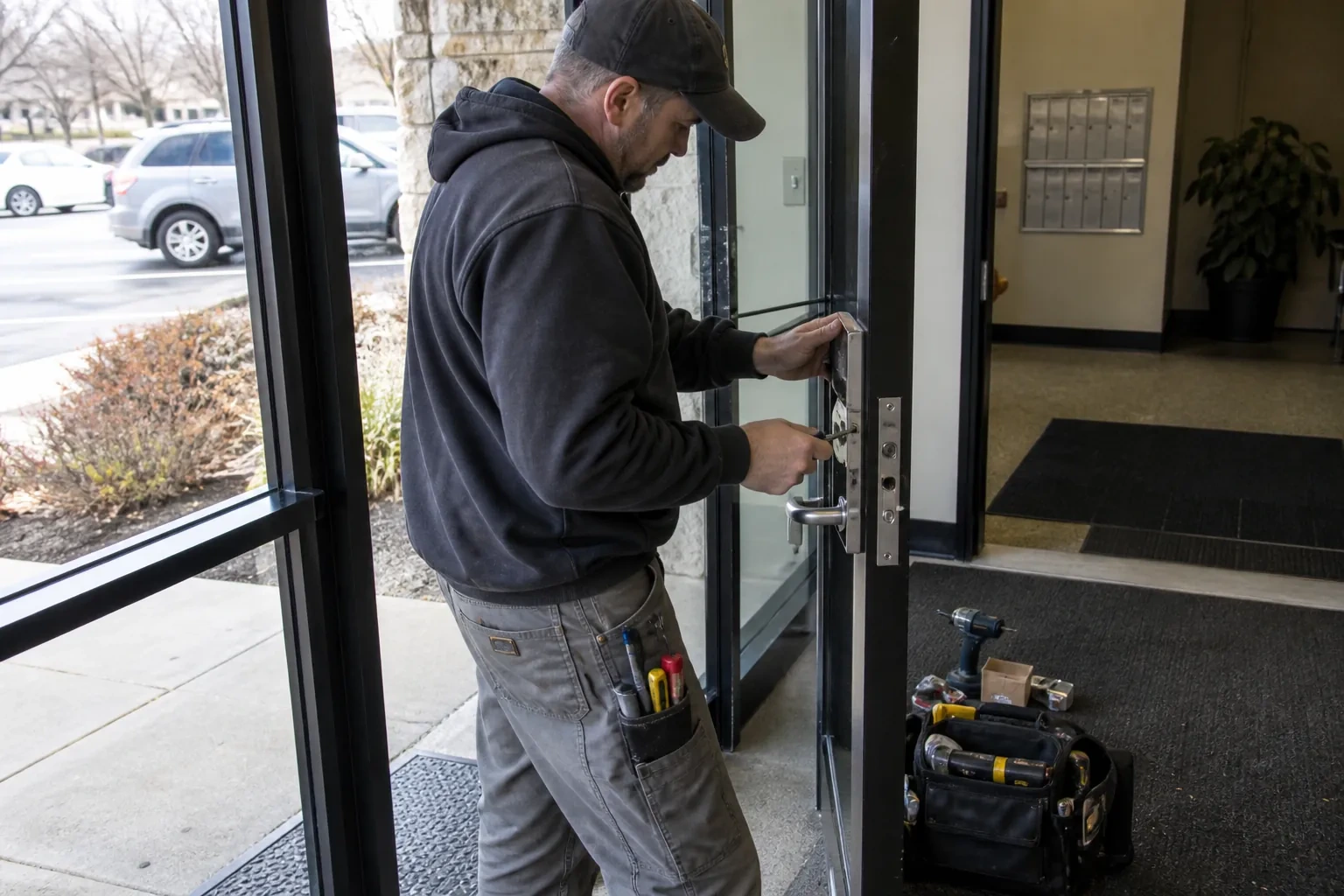
Suite doors, mailbox banks, bike rooms and lobby entries all have their own hardware and their own rules. We work with owners and property managers alike, keep the building's key system intact, and match replacement parts to what is already there.
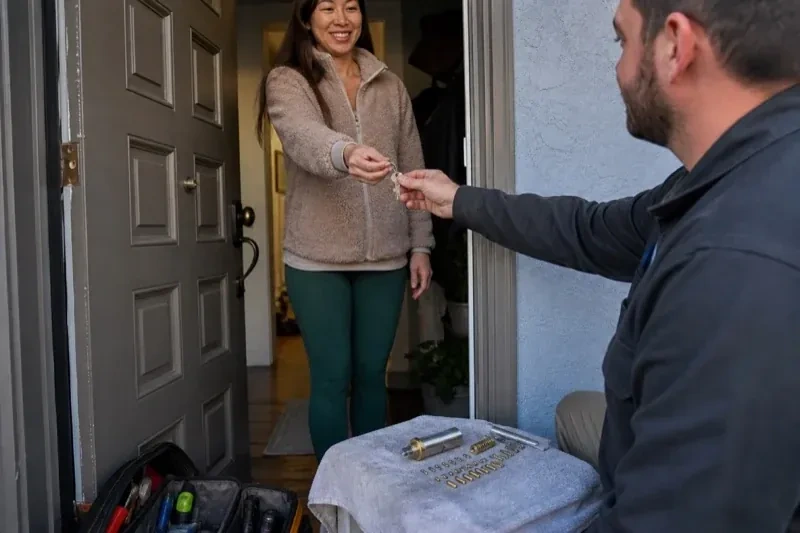
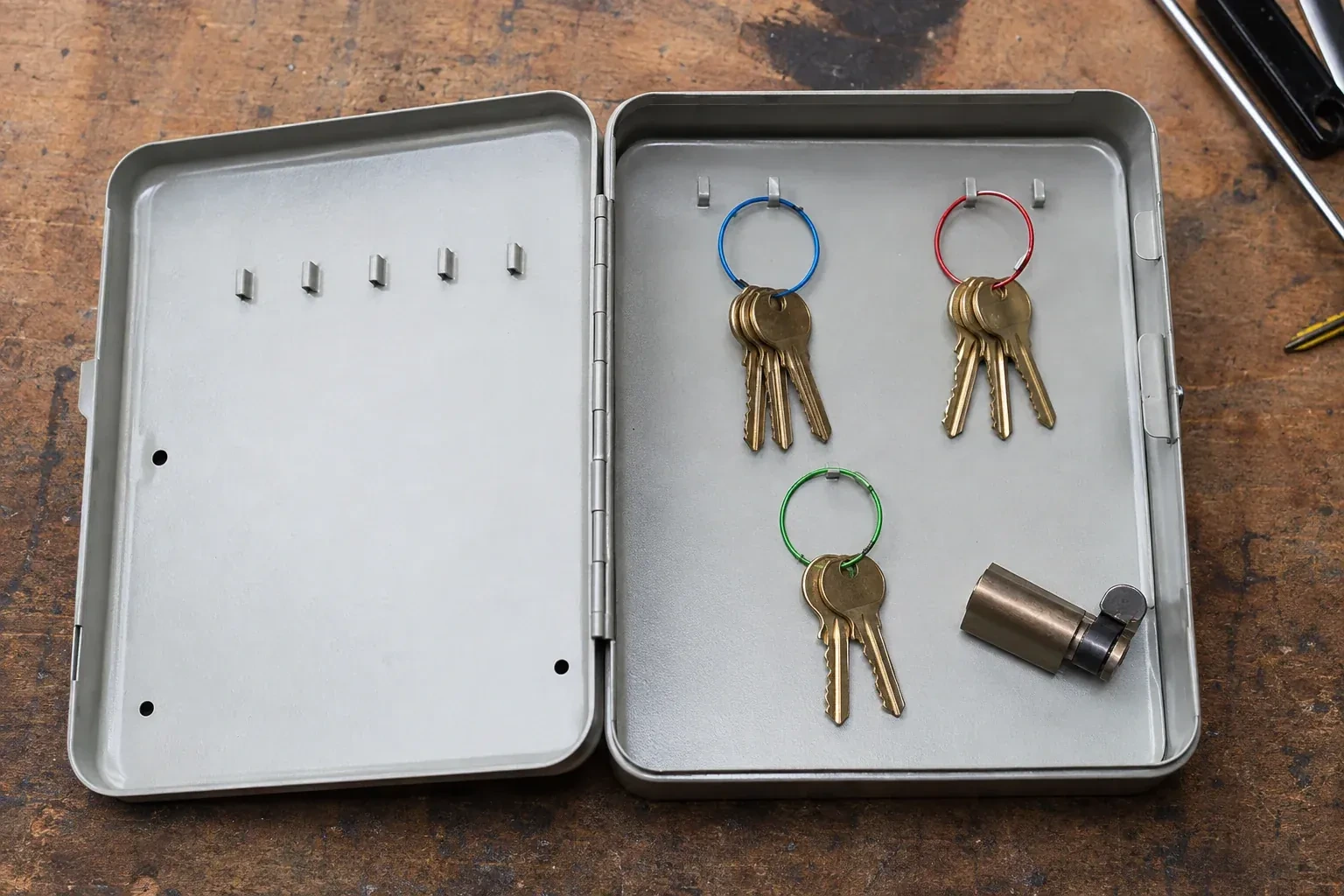
Our habit is to explain as we go. You will hear why the strike is being moved, what the new pins do, and which of the three keys on the counter is the one that now opens everything. It slows the job by a few minutes and it means you leave the visit understanding your own door, which we think is part of the service.
Questions welcomed. Ask about the lock, the method, the parts or the reasoning. A good explanation is part of the service, not a favour.
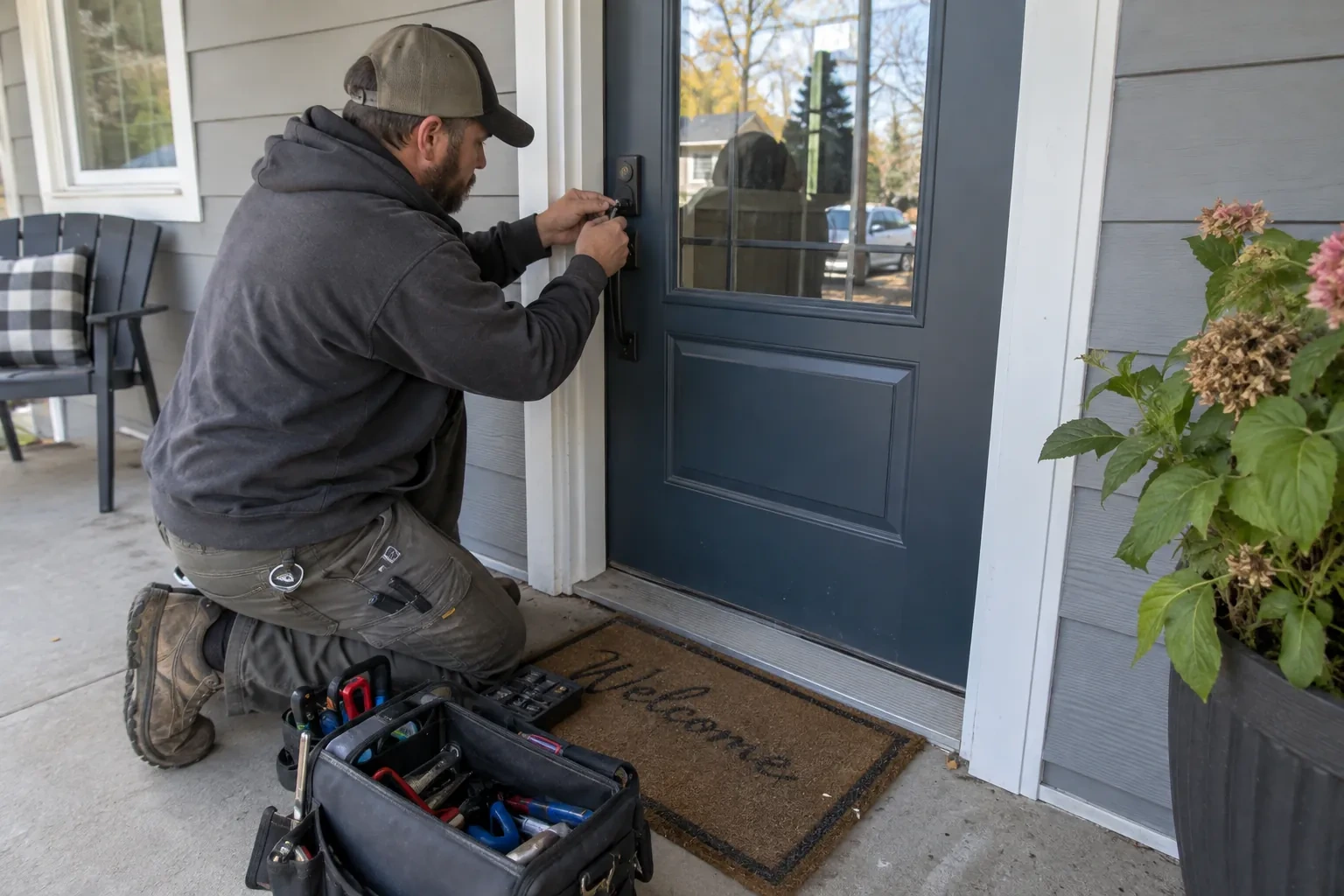
Nothing forced that could be finessed. We reach for picks and shims before drills, and we tell you if the lock has left us no gentle option.
Swept, wiped and working. Metal filings, drywall dust and old screws all leave with us. The lock is tested from both sides and the key handed over.
Open 24/7, same fees any hour. Let's fix that lock.
15 years in business · Start with a phone call: (289) 203-1527
Home lockout service
Help with locks and keys
Below are the jobs we handle most often. For each one you will find what it fixes, how a visit usually goes and what information helps us arrive with the right parts. If two services sound alike, call and we will explain the difference in a sentence.
Lockout ServicesLocked out, key snapped off, a door that will not open after a break-in.
Lockout Services
Locked out, key snapped off, a door that will not open after a break-in.
The key you reach for. The door you come home to. Good locksmith work begins with understanding how you use them.
Job sheet1 of 3
Lock Rekeying
The call
One key for the front door, another for the back, a third for the side door into the garage, and a fourth for the shed. You stand on the step every evening flipping through them in the dark, trying each one until something turns.
You were shovelling the driveway after dark and the ring must have slid out of your coat pocket somewhere under a metre of snow. You have raked the whole bank with a flashlight.
The manager who holds the only set of office keys is on a plane. The team is gathered in the corridor outside the suite, the landlord's office does not open for another hour, and the client meeting is at nine-thirty.
Most forced entries go through the strike and frame, not the cylinder, so this group treats the door as one assembly: hardened bolt, deep strike, three-inch screws, sound hinges, and a cylinder that defeats picks and drills on top of all that.
You run a home office with client files and equipment, and your insurer has asked what kind of lock is on the door. The honest answer is the builder's knob lock and a light deadbolt from when the house was new.
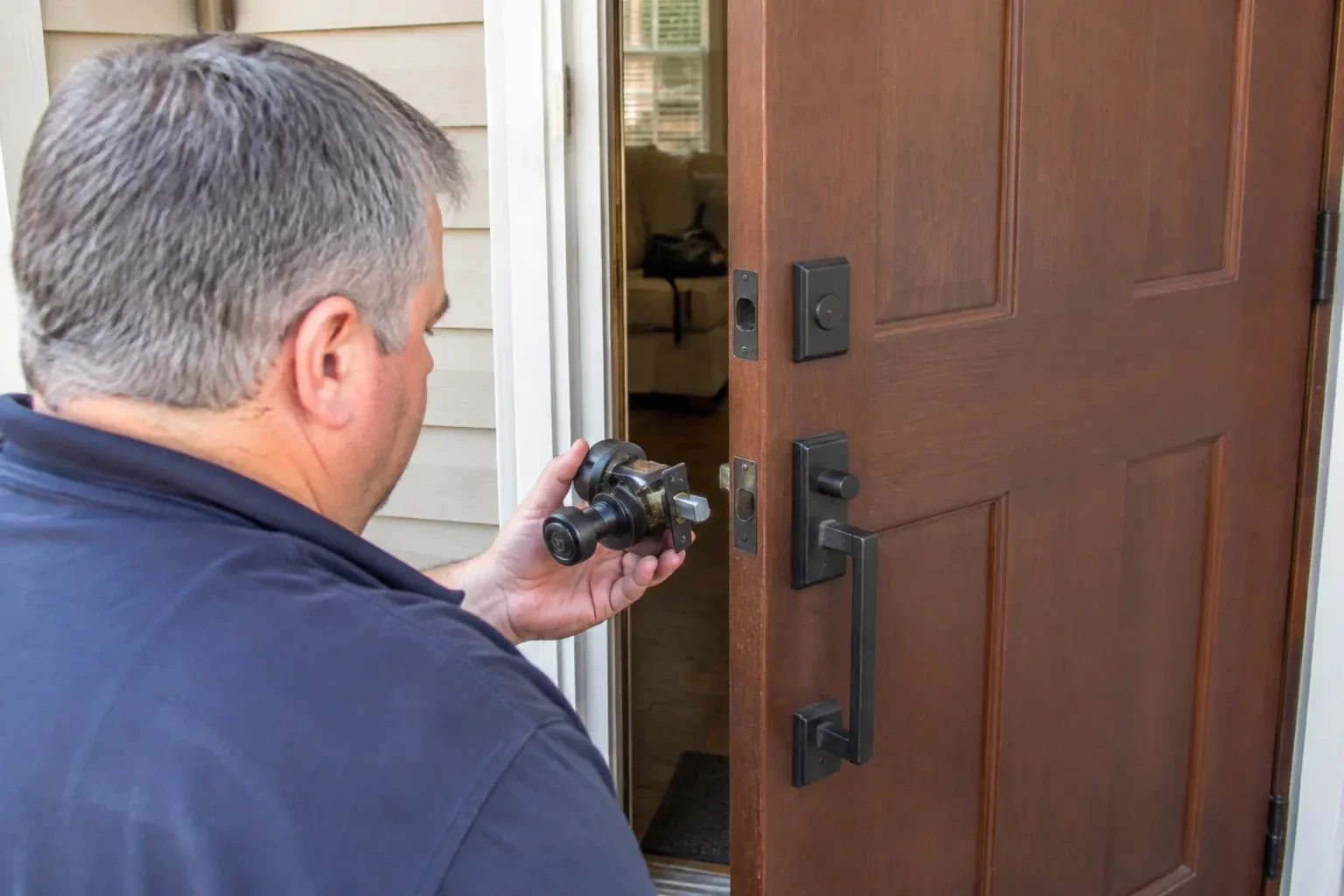
The lever on the side door droops toward the floor and rattles in your hand. The latch no longer springs back on its own, so the door drifts open behind you unless you pull it shut and check it twice.
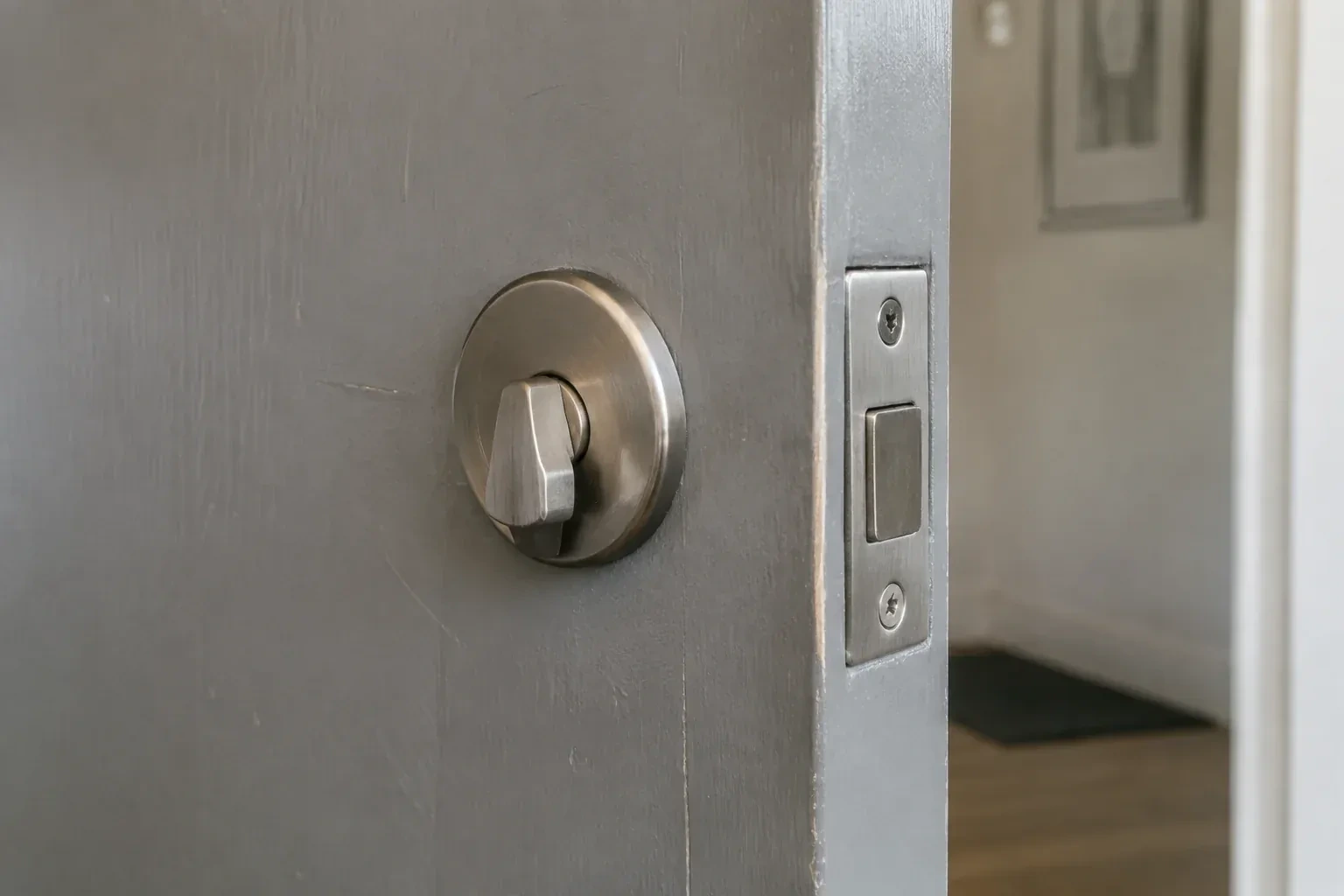
The bolt on the front door is keyed on both sides. Getting out at night means finding the key in the dark, and with a toddler in the house you have decided the inside should turn by hand.
They did not get in. The attempt left a screwdriver gouge in the door edge, a strike plate bent outward and a deadbolt that now needs a shove to throw.
High Security Locks. You run a home office with client files and equipment, and your insurer has asked what kind of lock is on the door.
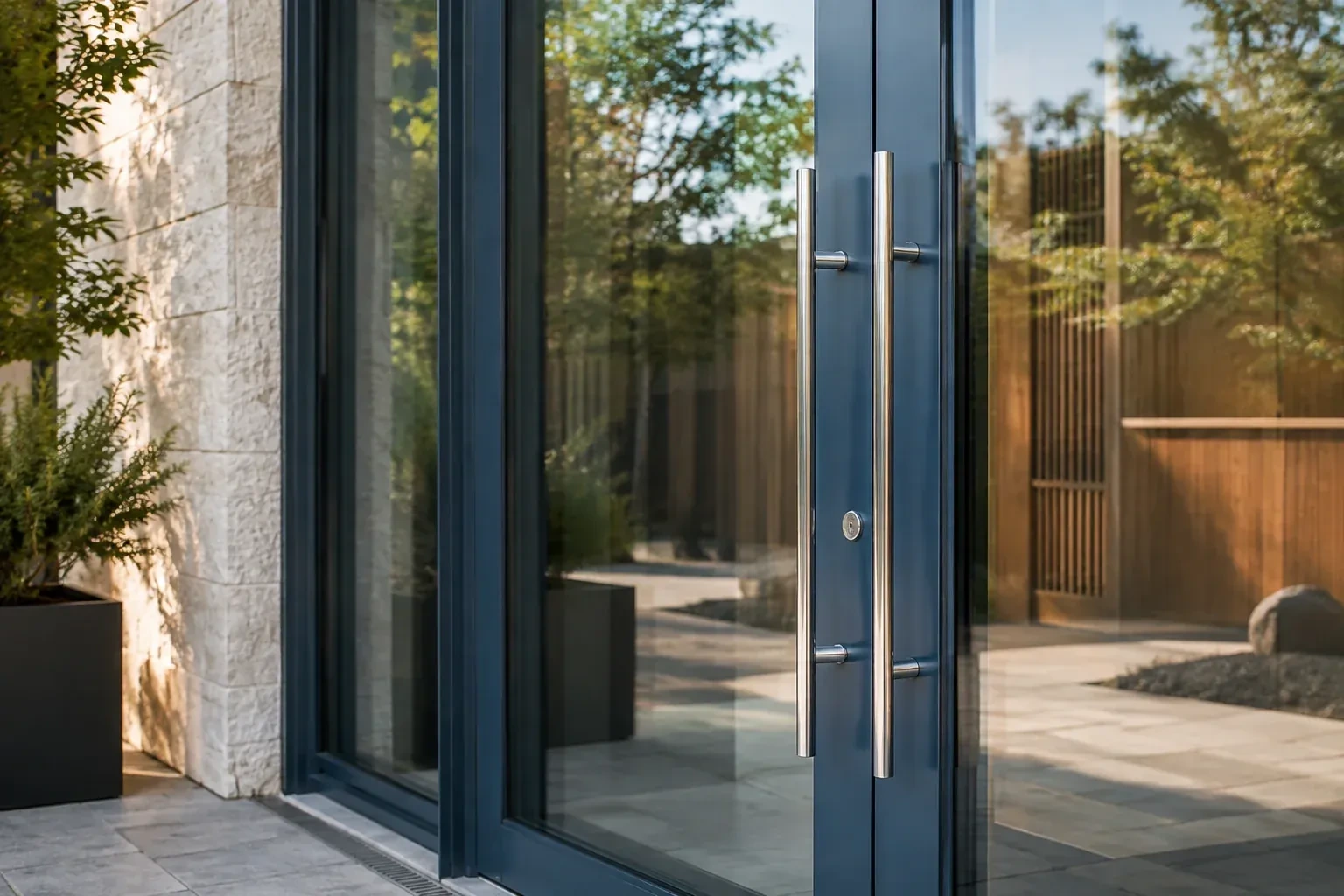
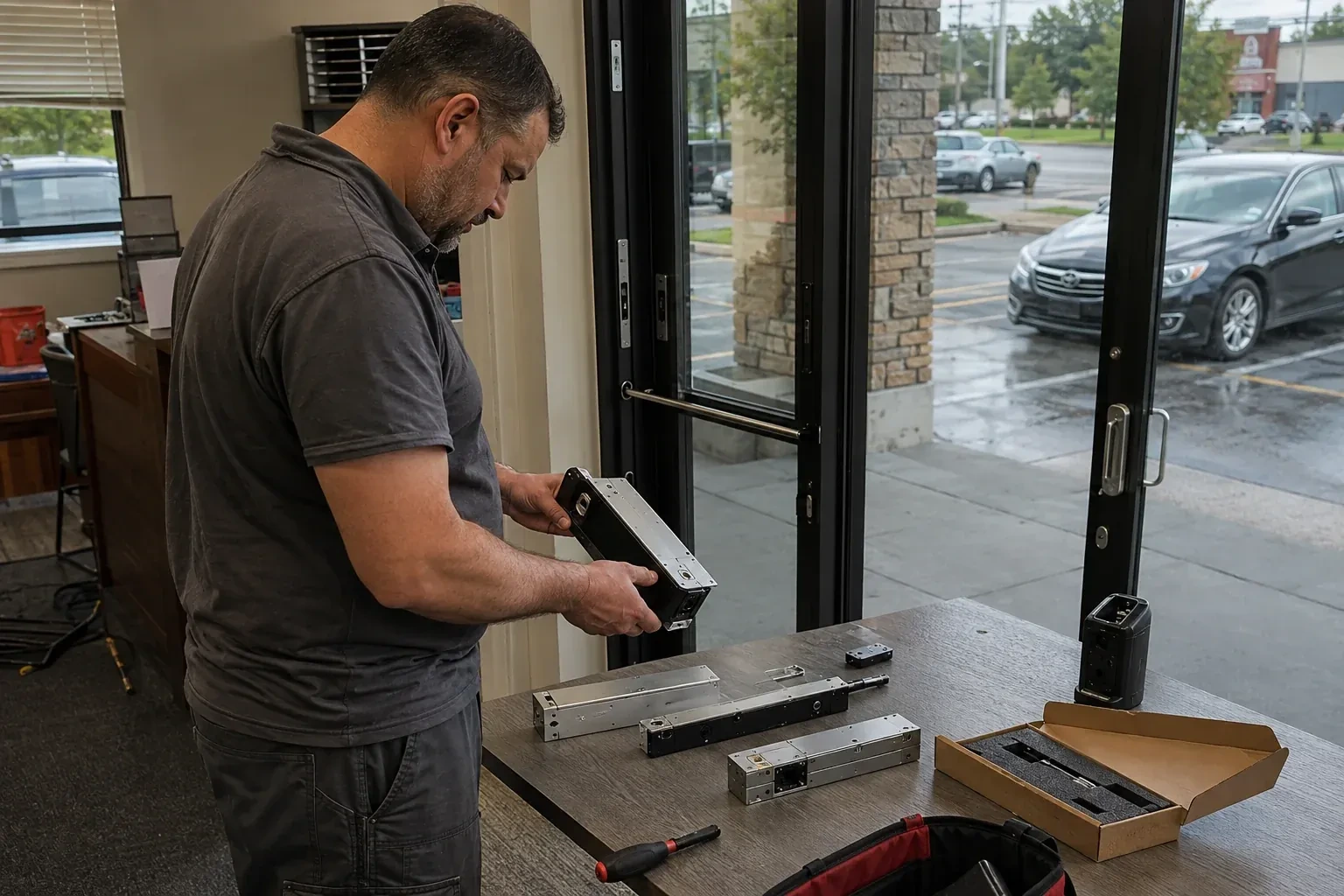
For multi-tenant buildings, the entry door, the mailroom, the mechanical room and each suite need their own place in a key plan. Commercial services include designing and installing that plan and keeping it workable as tenants come and go.
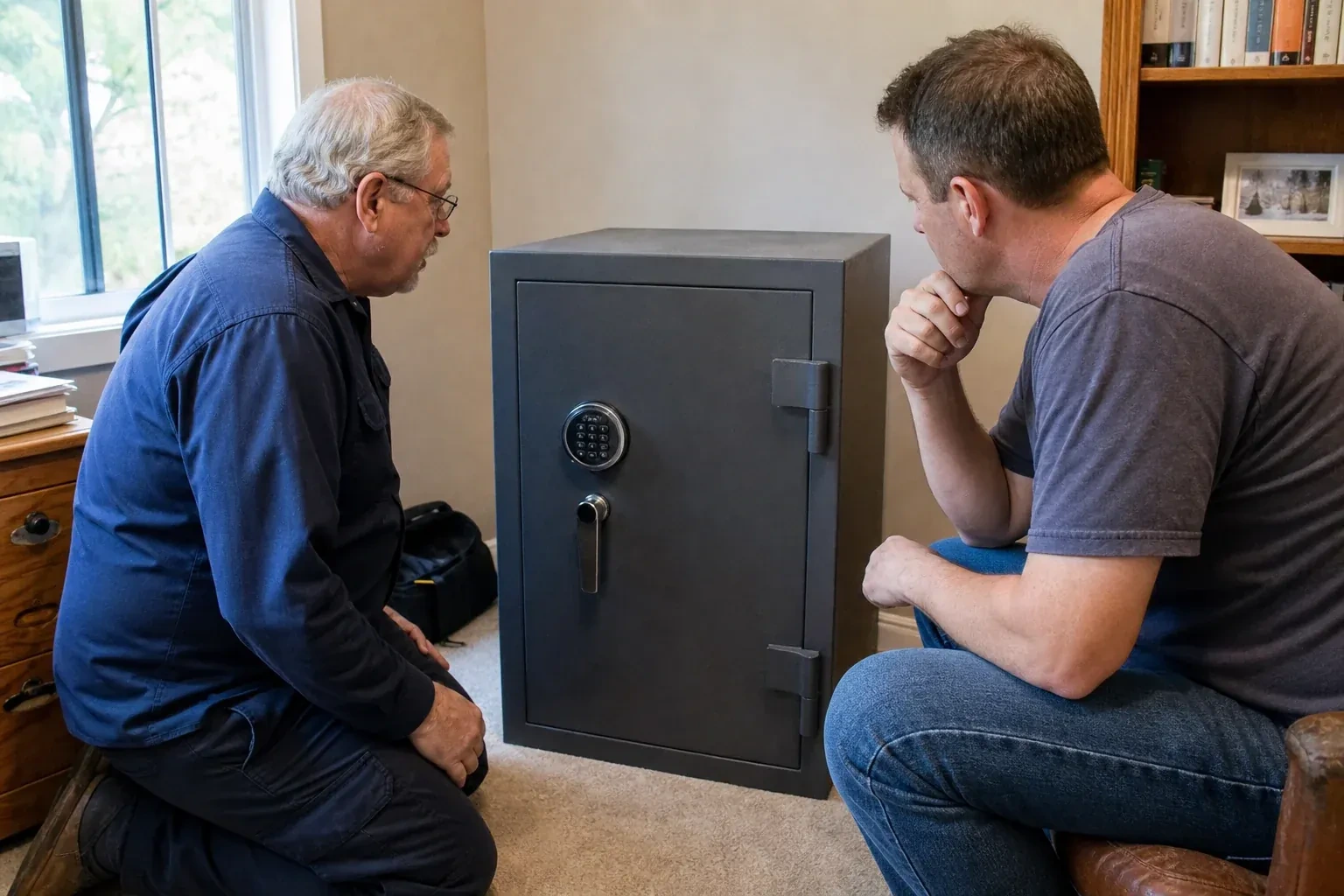
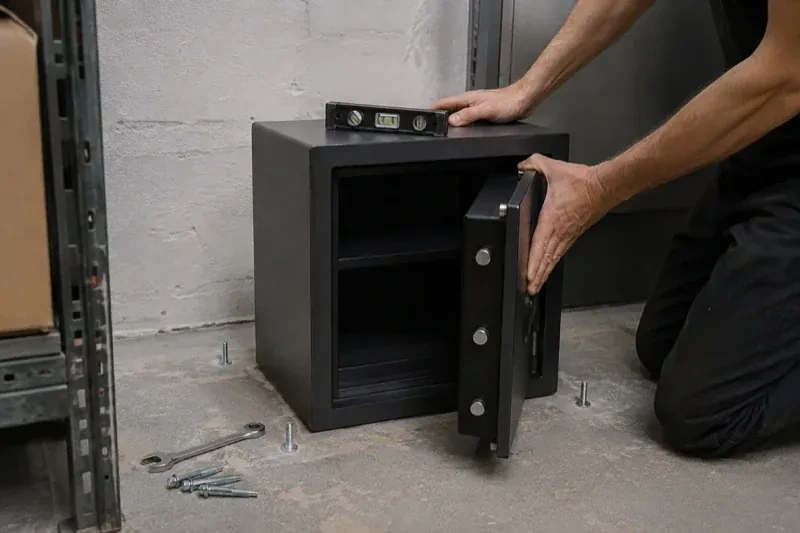
A safe opening and combination change service is built around confirming who has the right to be inside the safe before any tool touches it. Once that is settled, the locksmith identifies the safe's make, model and lock type, then works…
If You can see your keys through the window, sitting on the kitchen table.
Then A non-destructive opening.
Once we confirm you live here, most doors can be picked open with no damage and your key keeps working.
If The keys are gone and you have no idea where.
Then Open the door, then rekey the locks.
Getting in is only half the job; new pins mean whoever finds the old set has nothing that fits. Lock Rekeying
If The key snapped and half of it is still in the lock.
Then Extraction, then a fresh key cut from code.
The right tool draws the broken piece out without damaging the pins, so the cylinder usually stays.
Five scenes · open 24/7
How a visit goes
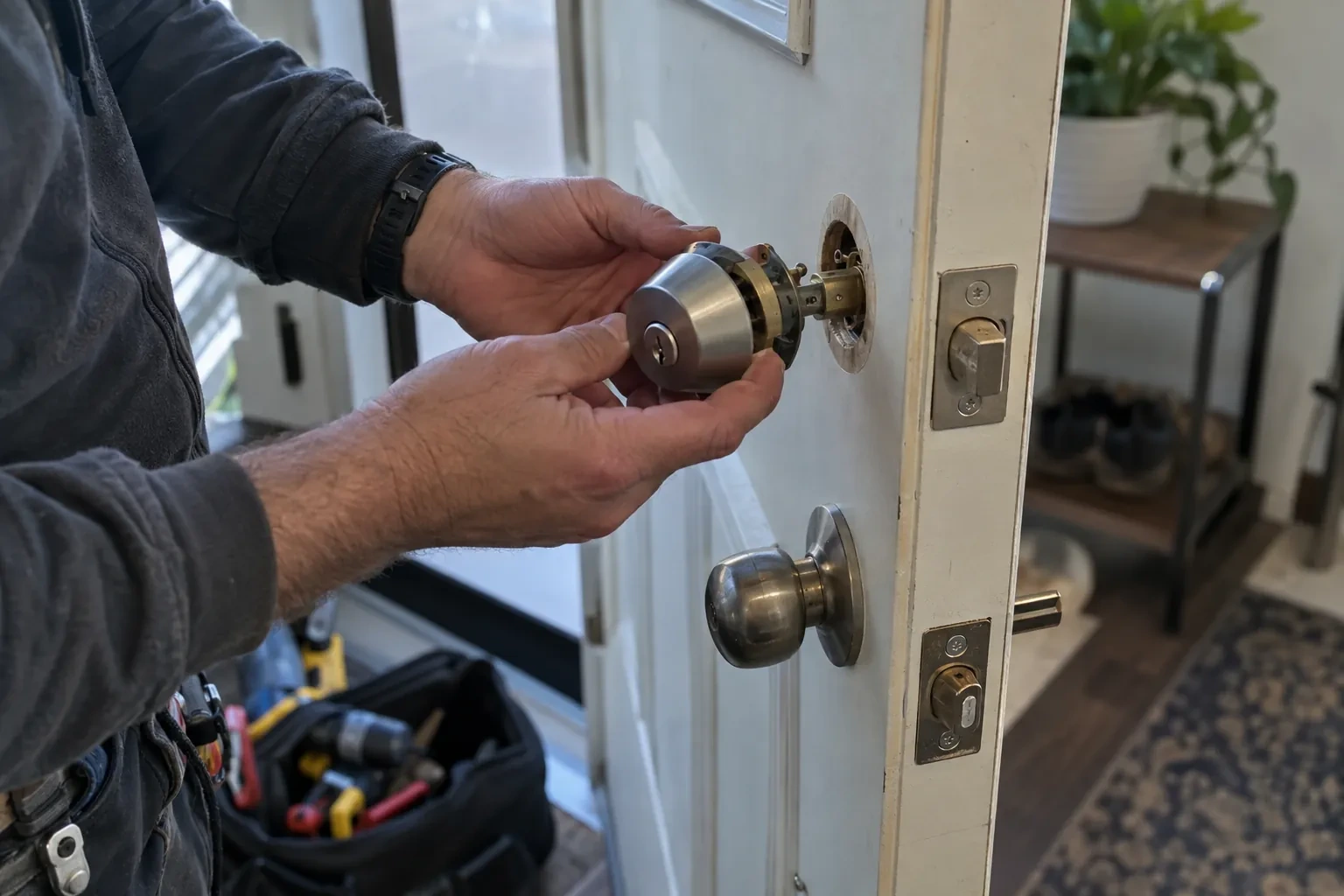
Our habit is to explain as we go. You will hear why the strike is being moved, what the new pins do, and which of the three keys on the counter is the one that now opens everything.
Scene 1 of 5
Call and describe the door
On our way
Questions welcomed
Nothing forced that could be finessed
Swept, wiped and working
Step 1 of 5
Call and describe the door
Describe the property, the hardware and what has changed, and the visit starts from what you have seen.
Step 2 of 5
On our way
Who comes and goes, whether you want codes or phone access, how the door is used in winter. The answers shape which lock suits you and how it should be set up.
Step 3 of 5
Questions welcomed
Ask about the lock, the method, the parts or the reasoning. A good explanation is part of the service, not a favour.
Step 4 of 5
Nothing forced that could be finessed
We reach for picks and shims before drills, and we tell you if the lock has left us no gentle option.
Step 5 of 5
Swept, wiped and working
Metal filings, drywall dust and old screws all leave with us. The lock is tested from both sides and the key handed over.
About 61% of homes in Hamilton were built in 1980 or earlier, according to the 2021 Census.Older homes tend to have had many hands on their doors: owners, tenants, tradespeople, family. A locksmith visiting such a house pays attention to who holds keys now, and rekeying or a keyed-alike set often matters more than any new hardware.
Single-detached houses make up about 56% of homes in Hamilton (2021 Census).In an area with both houses and attached homes, the work varies by the door. A detached house wants all its exterior doors on one key; a suite door wants a cylinder that suits a metal frame and respects building rules. A locksmith carries parts for both.
What is a restricted keyway, and is it worth having?
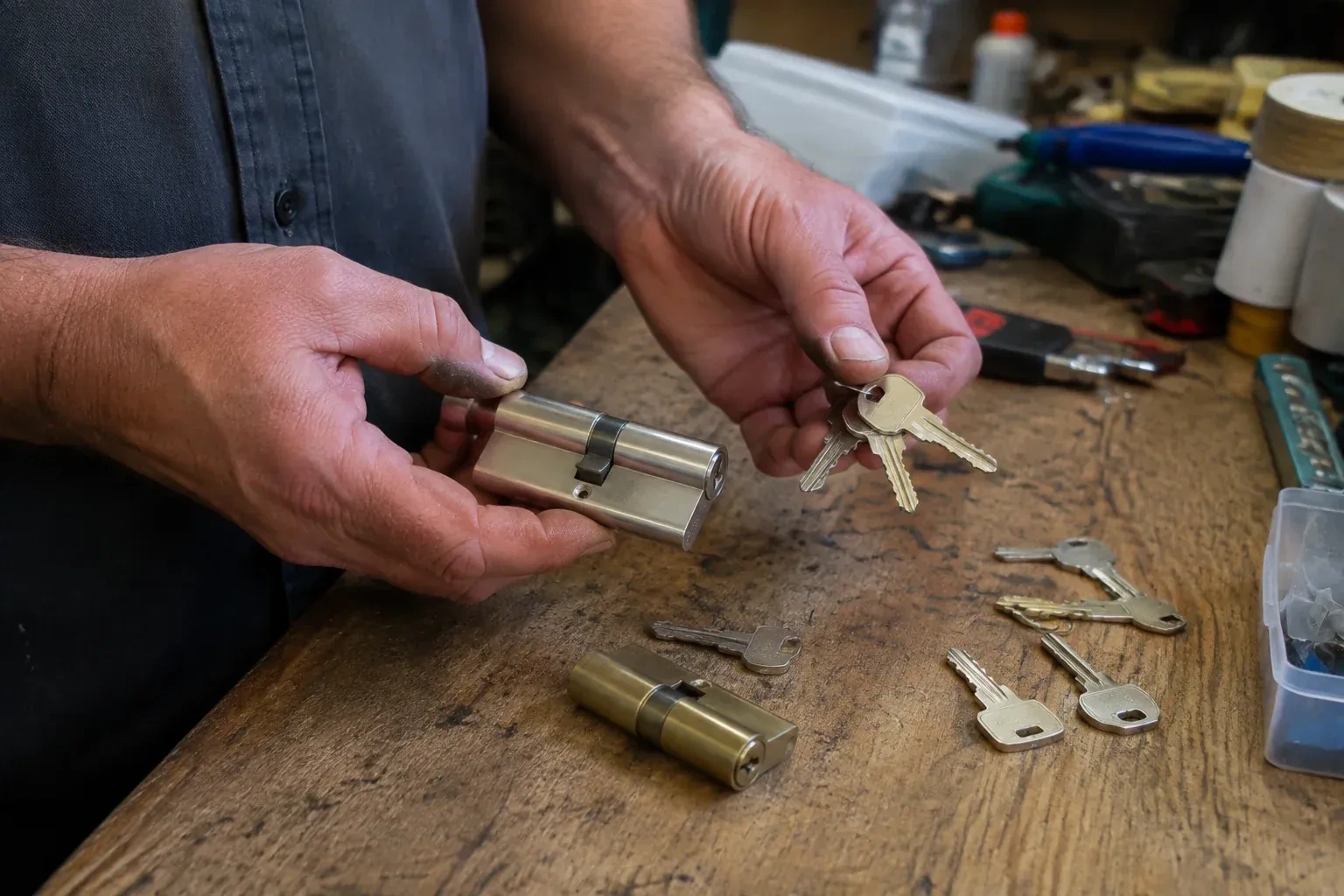
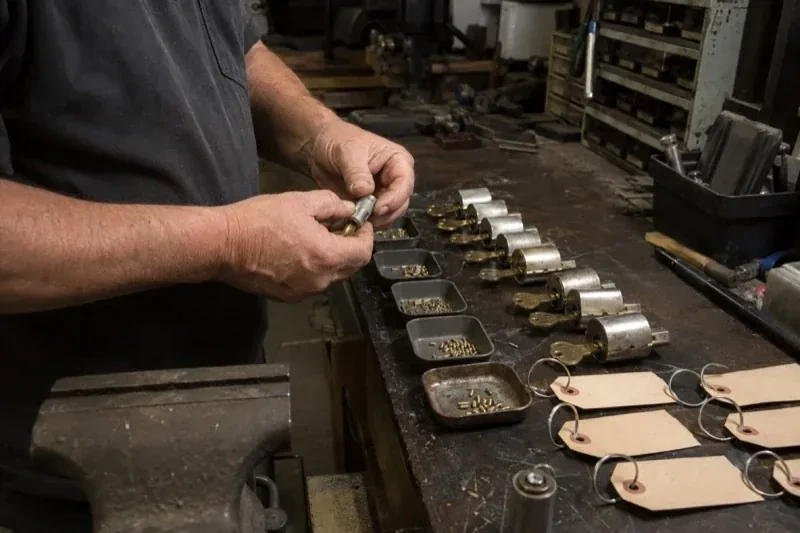
A restricted keyway uses a controlled key profile whose blanks are supplied only through an authorised channel; the credential required, a letter, a registered account, a dealer agreement or a key card, depends on the system. Rekeying such a cylinder is routine work with the right pin kit. For a household that has just lost a key and wants the next one to be truly countable, it is a sensible upgrade for the main doors, and it can be fitted during the same visit.
Can all my doors work on one key afterwards?
Usually, yes. Cylinders that share a keyway family accept the same blank, so they can be pinned to one combination during the rekey. The front door, back door, garage entry and a gate padlock of the same family become a single key. Where a door uses a different family, the locksmith can swap its cylinder for a compatible one in the same visit, or you can choose to keep two keys for that door.
Does the locksmith need to see the actual lost key, or just look at the lock?
Just the lock, and the door it is fitted to. A rekey works on the cylinder itself: the locksmith opens it, fits a new set of pins matched to a fresh key, and the old key stops working the moment that is done, whether or not it ever turns up again. Knowing roughly how the old key looked, cut on both edges, a chip on the head, a certain brand, can still help identify which cylinders in the house shared that key.
What proof do I need to show before locks are changed?
The locksmith confirms that the person ordering the work is entitled to change the locks: the owner, a tenant with the landlord's agreement, or a property or facilities manager for a business. Photo identification and something linking you to the address usually settle it, and for a company a letter or a call to the named contact does the same. It protects you as much as anyone, since the same check stops someone else from changing your locks.