Sound familiar?Hamilton
- The call
- The electric strike buzzes the moment the receptionist presses the release button, but the door still needs a shoulder to get past the latch, as though the two pieces were never matched.
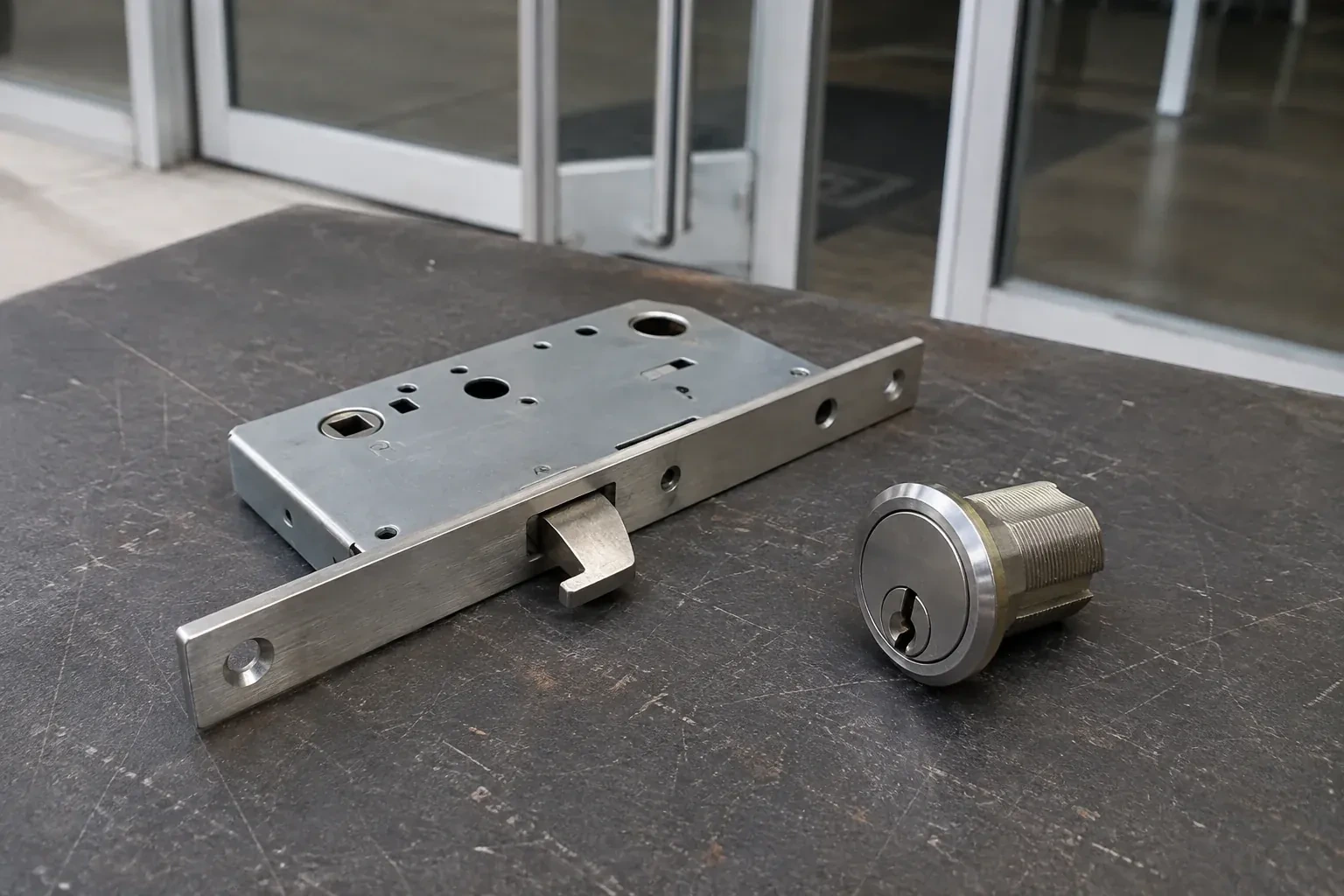
At closing time the hookbolt on the storefront door catches the keeper only on the second or third try, and one employee has started giving the door a shoulder to force it home.
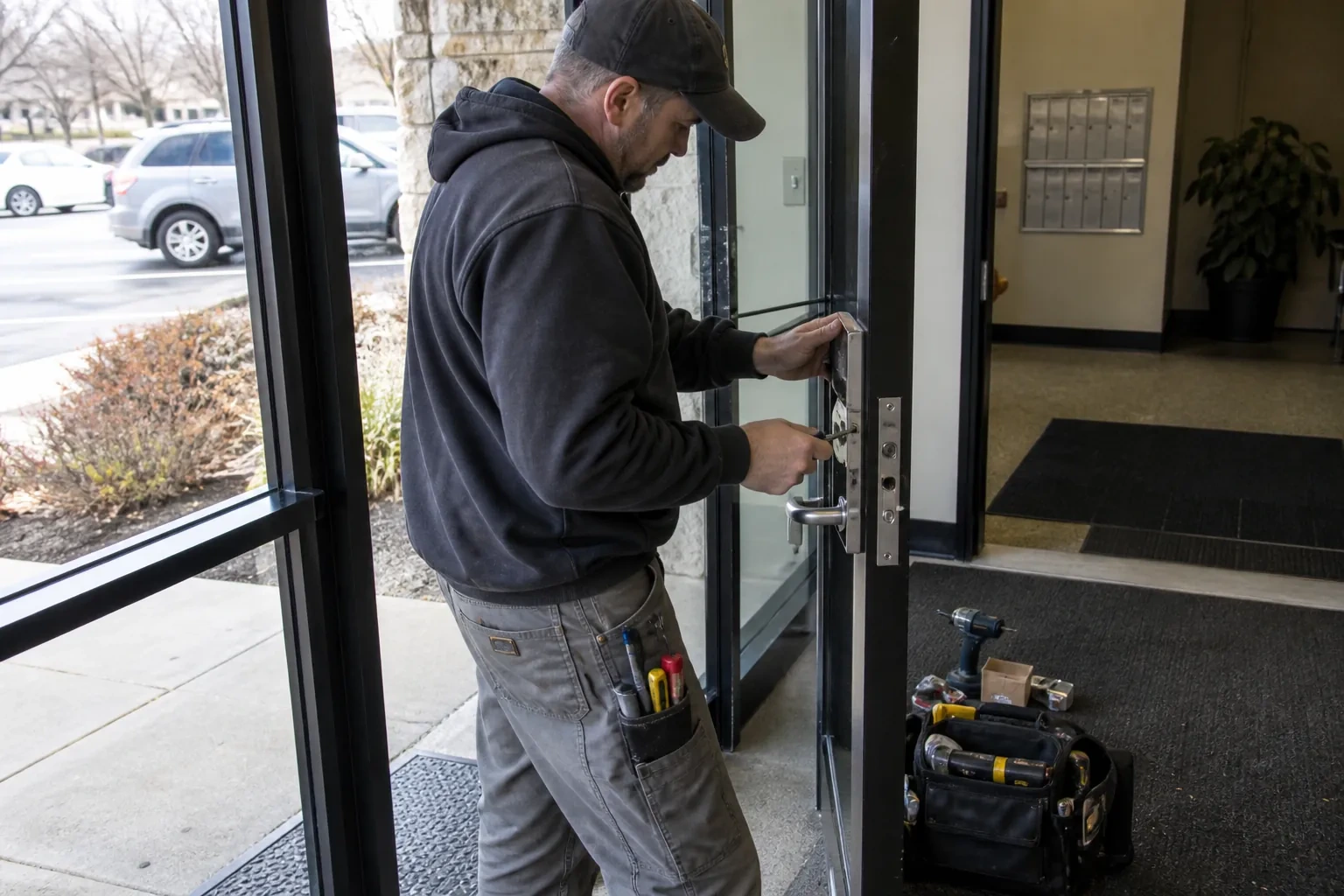
Businesses often reach this service after something specific happens: a break-in, a departing employee holding a working key, a lease turnover, or an inspector's note about the rear exit. Whatever the trigger, the work itself follows the same order. The locksmith assesses the door and its current hardware, agrees with an authorized contact on the keying the new lock should follow, fits hardware rated for the opening's construction and use, and connects it to anything else already wired into that door, such as an alarm contact or an access-control reader, before testing and handing the keys over.
Sound familiar?Hamilton
Commercial-Grade Lock Replacement · Hamilton
Scene 1
Every commercial building runs some kind of keying logic, even an informal one, and the locksmith maps it before touching hardware: is this cylinder on the same key as other doors, does it belong to a master or grand-master system, is it a standard keyway or a restricted one that only a specific supplier can cut? Getting this picture first means the new hardware can be ordered to slot into that structure, onto a fresh structure the business wants instead, or left standing alone if that is genuinely what is wanted.
Scene 2
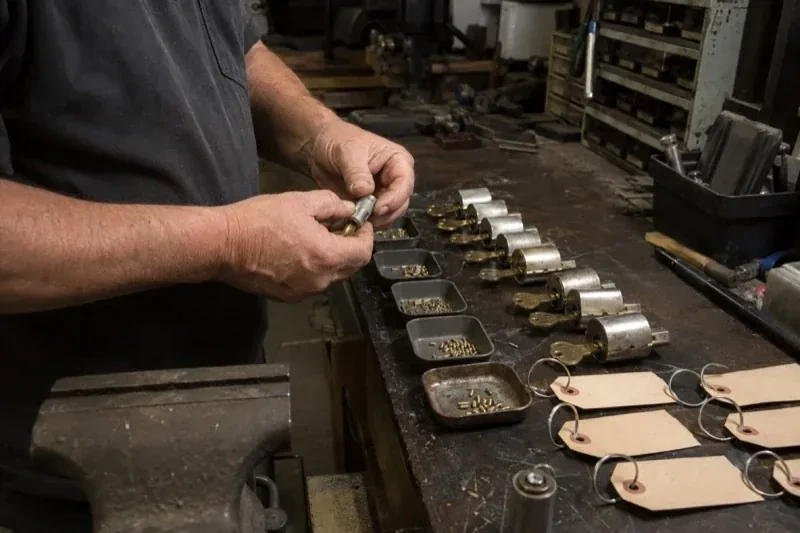
New keys are cut to the agreed system and tested in every door they are meant to open before anyone leaves the site. Where a master or interchangeable-core system is involved, the locksmith updates the business's key-control log with what was issued, what was retired, and which doors now share which key, so the paper record matches the metal. Any key that was reported lost or held by someone no longer with the business is confirmed as no longer functional on the new hardware.
Scene 3
Where the visit brought hardware onto a shared master or interchangeable-core system, the business now has one coherent structure instead of a different cylinder on every door. A master key opens what it is supposed to, sub-master and change keys are limited to their own doors, and the key-control log reflects exactly who was issued what. The next time a lock needs attention, whoever handles it can read that log rather than guessing at what system, if any, the previous hardware belonged to.
What shapes the quoteBuchanan Lock Services
FeesSame any hour
A grand-master system adds a layer above a standard master key, useful for a business with several buildings or departments where one senior key should open everything and mid-level keys should open only their own area. A single-location business with a handful of doors usually only needs a straightforward master and change-key structure, without the extra layer.
Yes, that is usually the first decision made. The locksmith checks whether your doors already run on a master or grand-master system, an interchangeable-core setup, or a restricted keyway, and orders replacement cylinders that slot into whichever structure you want to keep or move to. Bringing a new door onto an existing system is generally simpler than starting that door on its own.
A home lockout or residential rekey is usually about one door and one household's keys. Commercial-grade lock replacement more often involves a system, several doors, a master key structure, and sometimes a fire or exit rule the door has to satisfy, so the assessment, the hardware selected and the record kept at the end are all built around managing that wider structure rather than a single lock.
HamiltonOntario
Commercial-Grade Lock Replacement · Buchanan, Central, Chedoke Park, Cootes Paradise, Corktown, Hamilton Beach, Hopkins Court, Hopkins Survey, McDonald Court, North End, University Gardens, Waterdown, West Hamilton, Westdale, Pleasant View Survey
Every square is one home in a hundred.
On-site assessment
At closing time the hookbolt on the storefront door catches the keeper only on the second or third try, and one employee has started giving the door a shoulder to force it home.
(289) 203-1527, open 24/7.
On-site assessment preferred · (289) 203-1527, open 24/7