Sound familiar?Hamilton
- The call
- You jiggle the key a little and the old deadbolt opens even when the cut does not look quite right. If your worn key can do that, you wonder what a stranger with the right tools could do.
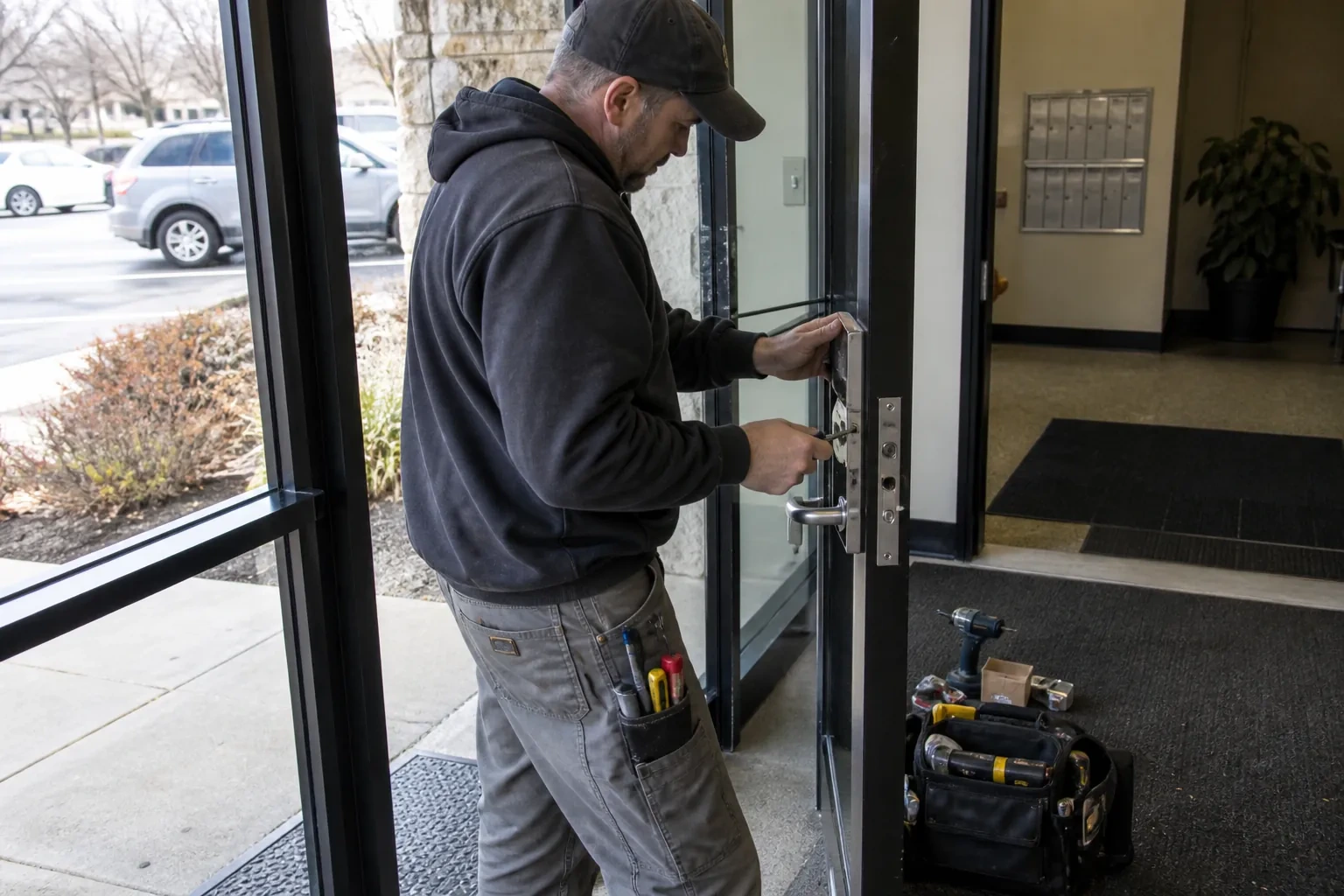
You run a home office with client files and equipment, and your insurer has asked what kind of lock is on the door. The honest answer is the builder's knob lock and a light deadbolt from when the house was new.
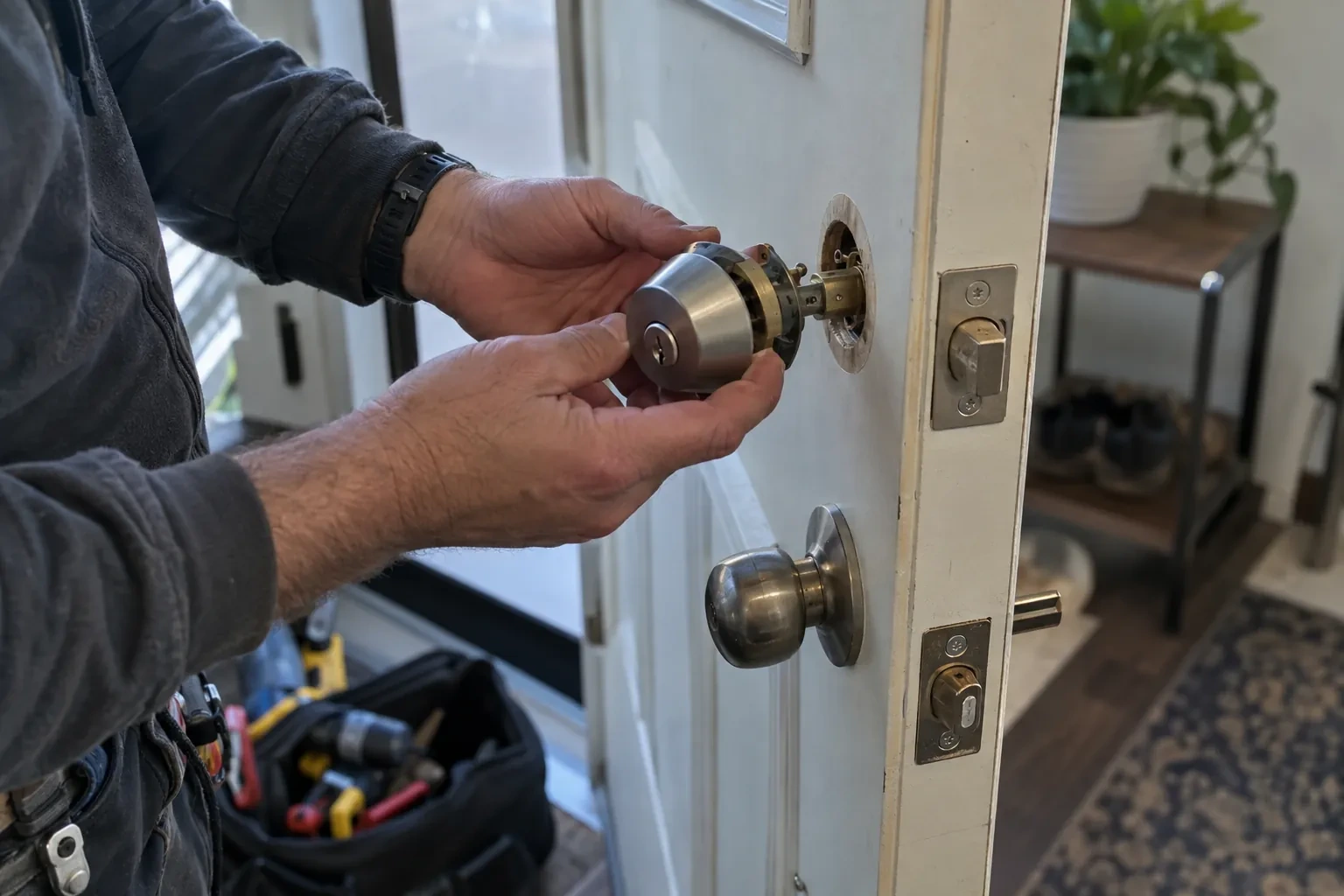
Think of the upgrade as four layers working together. The cylinder resists picking, bumping and drilling. The deadbolt resists sawing and kicking with a long, hardened bolt. The strike and screws keep the frame from splitting when the door is struck. And the key control stops copies being made without your say-so. A locksmith assesses your door for each layer and tells you where it is weak, because a strong cylinder screwed into a soft frame gains you little. Most homes end up with a graded deadbolt and a patented cylinder; businesses often step up to laboratory-rated cylinders and heavier lock bodies.
Sound familiar?Hamilton
High Security Locks · Hamilton
Scene 1
Ratings are only useful if someone explains them. A residential deadbolt carries a hardware grade for security, durability and finish based on hammer blows, pulling force and cycle testing. A high-security cylinder carries a separate laboratory listing based on how many minutes it resists picking, drilling and forcing. The locksmith explains what each figure means in practice for your door and points out the rule that matters most: the whole assembly takes the grade of its weakest part. That conversation ends with a recommendation you understand rather than a part number you have to trust.
Scene 2
When more than one door is upgraded, the locksmith plans the keying before pinning anything. A home usually wants every exterior door on one key. A business often wants staff keys that open the front and their own area, and one manager key that opens everything, arranged as a small master system on the same patented keyway. Cylinders are pinned on the bench, labelled and fitted door by door, and each key is checked against the doors it should open and, just as carefully, the doors it should not. The written key schedule is part of the handover.
Scene 3
The most noticeable change is not in the door but in your head. You know exactly how many keys exist, who holds each one and that nobody can add to that number without your authorisation. The system is registered in your name with the locksmith, so a request for an extra key comes back to you rather than being filled at a counter somewhere. Keep the authorisation card or login details somewhere safe and separate from the keys. When a key is lost, tell the locksmith; the record is updated and you can decide together whether that key's loss warrants any further step.
What shapes the quoteBuchanan Lock Services
FeesSame any hour
The locksmith confirms that the person ordering the work is entitled to change the locks: the owner, a tenant with the landlord's agreement, or a property or facilities manager for a business. Photo identification and something linking you to the address usually settle it, and for a company a letter or a call to the named contact does the same. It protects you as much as anyone, since the same check stops someone else from changing your locks.
The mechanical resistance of the cylinder does not change, but blanks may become openly available, so copy control weakens. Manufacturers issue new patented keyways as older ones expire, and the usual answer is to move to the next generation by changing cylinders and keys while keeping the lock bodies. Your locksmith notes the patent term at handover so the date is on the calendar rather than a surprise years later.
An authorised person contacts the locksmith who holds your system, quotes the system reference, and the key is cut from code and numbered into the register. Some systems use a physical authorisation card, others an online validation, and business systems often require a signature that matches one on file. The key is collected or delivered, and the record shows the new total. It is deliberately not something a stranger with your key can do.
HamiltonOntario
High Security Locks · Buchanan, Central, Chedoke Park, Cootes Paradise, Corktown, Hamilton Beach, Hopkins Court, Hopkins Survey, McDonald Court, North End, University Gardens, Waterdown, West Hamilton, Westdale, Pleasant View Survey
Every square is one home in a hundred.
On-site assessment
You run a home office with client files and equipment, and your insurer has asked what kind of lock is on the door.
(289) 203-1527, open 24/7.
On-site assessment preferred · (289) 203-1527, open 24/7