Skip to content
BuchananLock ServicesOpen 24/7 (289) 203-1527
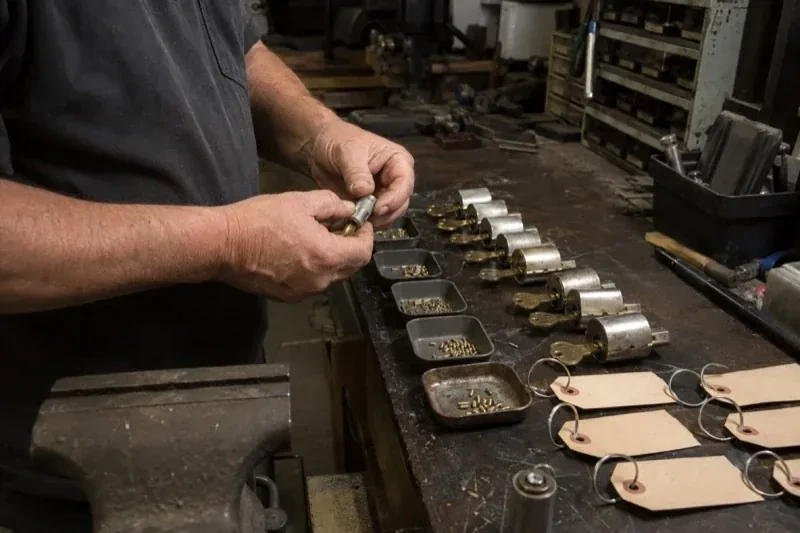
Person handling a lock cylinder at a workbench lined with cylinders, keys, small pin trays and blank key tags. — Commercial Rekeying, West Hamilton

Commercial · West Hamilton

Commercial Rekeying

You have just signed the lease on a unit the previous tenant ran for a decade. The landlord handed over three keys, the back door wears a padlock nobody can open, and nobody can say how many front-door keys are still out there.

In plain words

Taking over a commercial unit is the moment to make the locks yours. The keys handed across at signing are only the ones the previous occupant remembered; cleaners, suppliers and former staff may still carry others. Rekeying every cylinder your lease gives you control of gives you a clean start on day one, with keys cut for your team and a chart of which door each one opens. The locksmith also clears up the odds and ends that come with a new lease: a padlock with no key, a mailbox lock seized since the last tenant. You open knowing exactly who can get in.

Sound familiar?West Hamilton

The call
A key turned up in the parking lot with the shop's name on its fob. It came back to you, which is lucky, but it means keys are leaving the building on rings you have never seen, and the shop's locks have not changed since opening day.
NextHow the visit goes

Commercial Rekeying · West Hamilton

How the visit goes

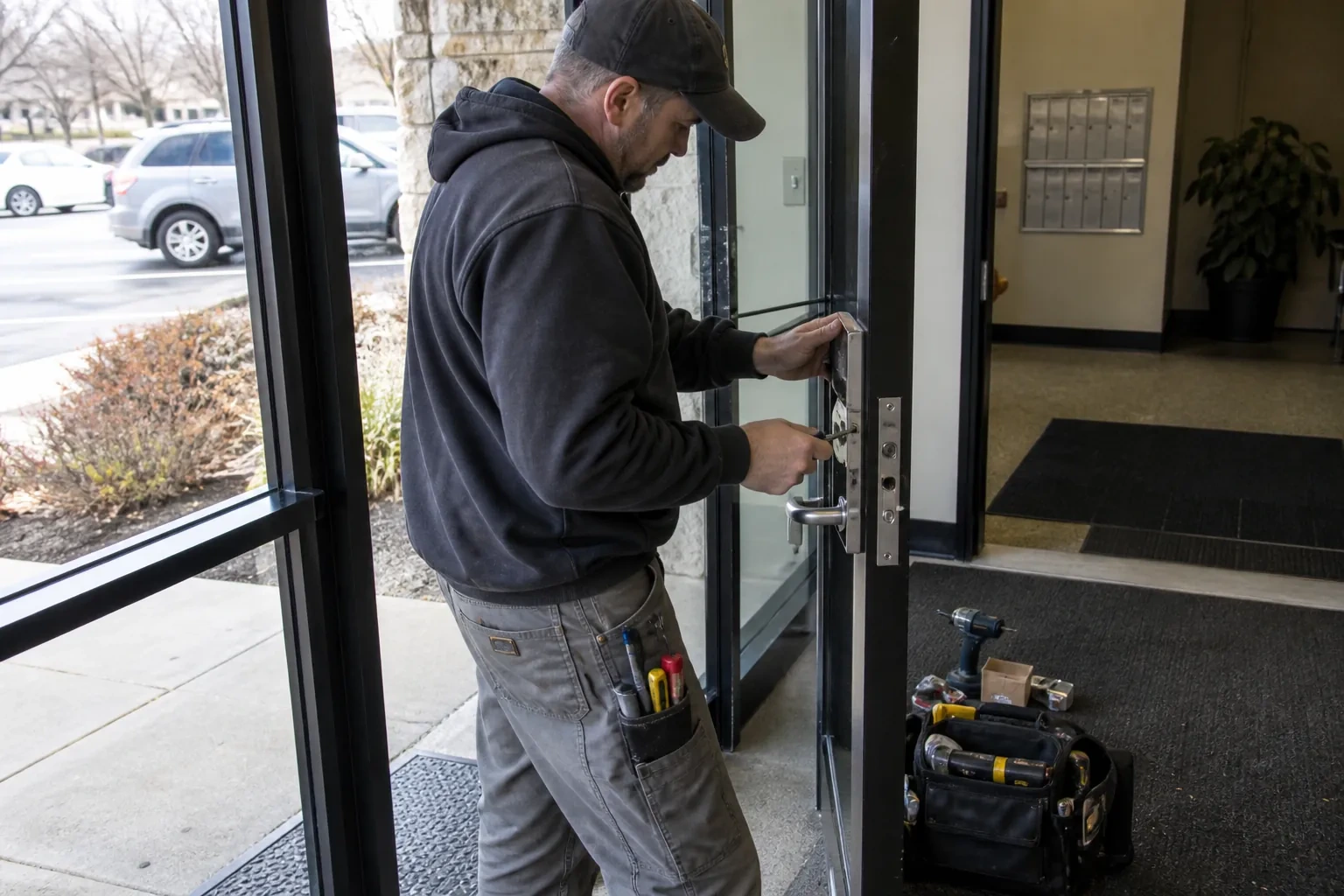
Technician in a cap and hooded sweatshirt using a small screwdriver on the lever handle and lock case of a glass door. — West Hamilton
  1. Scene 1

    A walk of every door and lock

    The locksmith walks the premises with you and lists every opening that should be in the plan: the customer entrance, the receiving door, offices, stockroom, cash room, server closet, the mailbox, cabinets, and any padlocks on gates, compounds or roll shutters. Each lock is identified by type, since a mortise cylinder in an aluminum storefront door, a key-in-lever set on an office, a rim cylinder on a back door and an interchangeable core in a stockroom each come out and go back in differently. The keyway and the maker's mark are noted, and the condition of each cylinder is checked, so the list from the walk is what the quote and the work are built on.

  2. Scene 2

    Cutting and marking the new keys

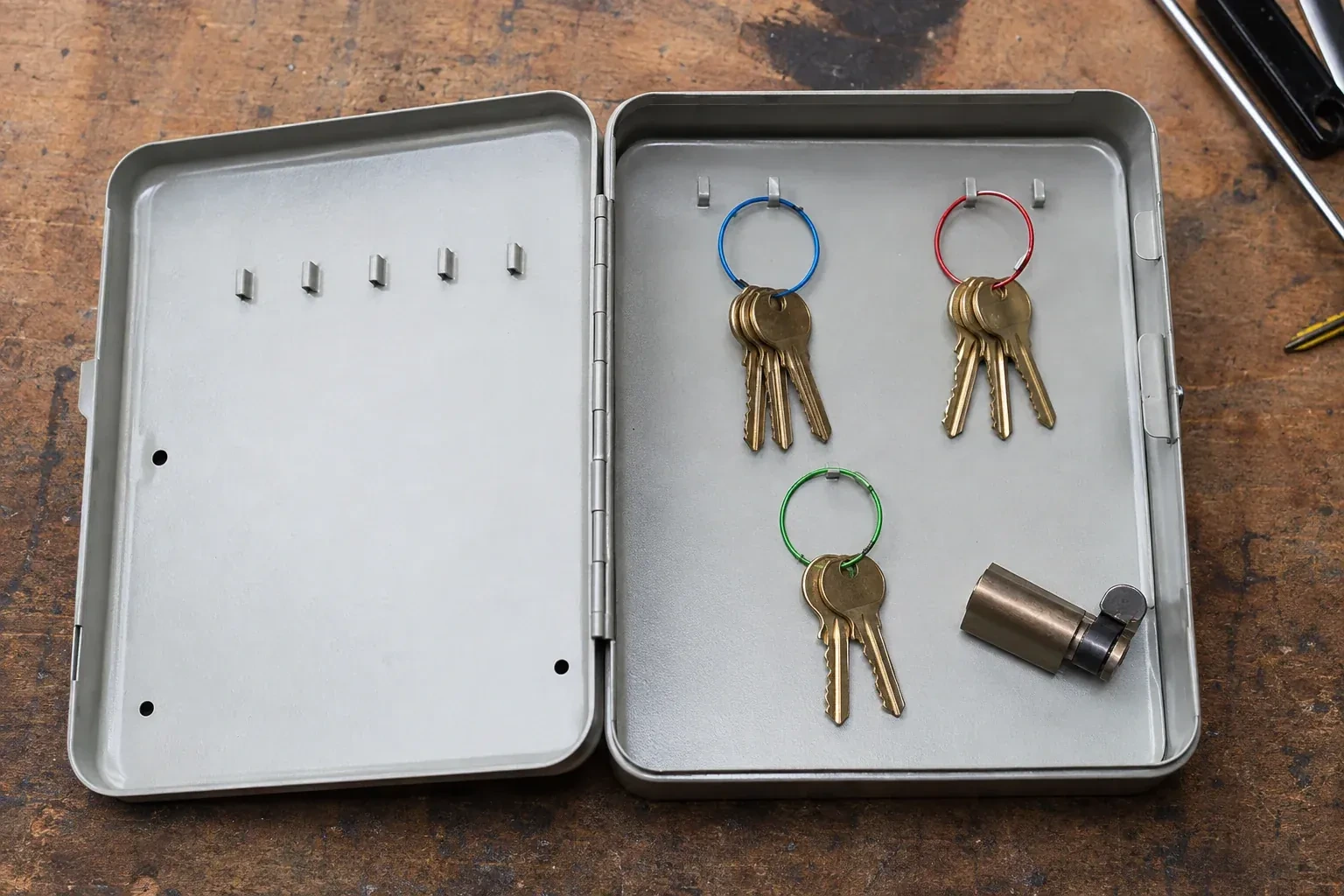
    Keys are cut to the new combinations on a code machine rather than traced from another key, so every copy is exact and the tenth key fits as cleanly as the first. Each key is stamped with a short code that means something only on the keying chart; the business name, the address and the word for the door it opens stay off the metal, so a lost key gives nothing away. Keys are counted out by group, tagged, and listed against the names of the people who will carry them. Where the plan uses a restricted keyway, the blanks are drawn against the authorization letter, and that letter is filed with the chart for future orders.

  3. Scene 3

    How copies get made from now on

    If the business moved to a restricted keyway, the way keys are copied has changed for good. Hardware stores and kiosks do not stock the blanks, which makes running off a spare on a lunch break far harder to arrange. New keys are ordered from the locksmith by one of the people named on the authorization letter, who signs for them, and the register grows by exactly that many. On a standard keyway, the same discipline is kept by habit: the manager orders keys, the register records them and a key that turns up unlisted prompts a question. Either way the count on paper and the count in the world stay the same, which is what key control means.

In the van

  • Rekeyable padlocks
  • Commercial pin kit
  • Standard and restricted key blanks
  • Interchangeable cores and control key
  • Dry graphite or PTFE lubricant

What shapes the quoteBuchanan Lock Services

Restricted keyway
Moving to a patented, restricted keyway means new cylinders or cores rather than a repin of the old ones, and the blanks themselves carry a higher price than standard keys.
After-hours or split visits
Work done after closing, before opening or split across two visits to suit trading hours costs the same amount as a single daytime block. The exact figure is confirmed on site once the number of cylinders and the keying plan are known.
No existing chart or keys
When nobody knows what the current keys open, the locksmith reads and records each cylinder before planning the new keying, and that reconstruction is time in the quote.

FeesSame any hour

Have it ready

Before you call · 0 / 3

(289) 203-1527

What to expect, answered

We are a landlord with a tenant leaving. When should the unit be rekeyed?

Between tenants is the ideal moment: the departing tenant has handed back their keys, the new one has not yet received any, and the unit is empty for the work. The incoming tenant then starts on keys nobody else has held, and the landlord's own master or emergency key is set up at the same time. Where a lease has ended in dispute, the locksmith asks to see the paperwork before changing locks on a unit that still holds a tenant's goods.

What is an interchangeable core and why is it suggested for staff turnover?

A small-format interchangeable core is a small figure-eight cylinder that slides out of the lever, deadbolt or padlock when a control key is turned, with no tools needed; larger doors sometimes use a large-format core with a different profile instead. A manager keeps the control key in the safe and a few spare cores on hand, so a missing key means the core is swapped in moments and repinned later. For a business with frequent staff turnover, it turns a call-out into a routine.

How often should a business change its keys as a matter of routine?

There is no fixed interval. Rekey on events rather than on a calendar: a key not returned, a lease change, a break-in, a renovation crew finished, or a key count that no longer matches the register. Businesses with a good register and a restricted keyway often go years between rekeys because nothing prompts one. A yearly check of the register against the keys on the hook is the habit that tells you when the time has come.

West Hamiltoninformation

HamiltonOntario

Town
West Hamilton, Hamilton
In business
15 years
Hours
Open 24/7
Nights, weekends and holidays, same fees
Visits
On-site assessment preferred. Request a visit or call.

2021 census: what it means at the door

Every square is one home in a hundred.

  • 61 in 100 homes · older homes
  • About 61% of homes in Hamilton were built in 1980 or earlier, according to the 2021 Census.Where most homes were built decades ago, doors often still carry their original mortise locks and brass knobs. That hardware can usually be cleaned, re-sprung and kept in service, with a modern deadbolt added above it for strength without losing the look.
  • Single-detached houses make up about 56% of homes in Hamilton (2021 Census).Mixed housing means a locksmith sees a bungalow in the morning and a condo tower in the afternoon. The stocked van has house-door deadbolts, suite-door cylinders and the finishes for each, so neither kind of customer waits for a second visit.

Source: Statistics Canada, Census Profile

Open West Hamilton in Google Maps

On-site assessment

Request a visit.

You have just signed the lease on a unit the previous tenant ran for a decade.

(289) 203-1527, open 24/7.