Sound familiar?Hopkins Survey
- The call
- You jiggle the key a little and the old deadbolt opens even when the cut does not look quite right. If your worn key can do that, you wonder what a stranger with the right tools could do.
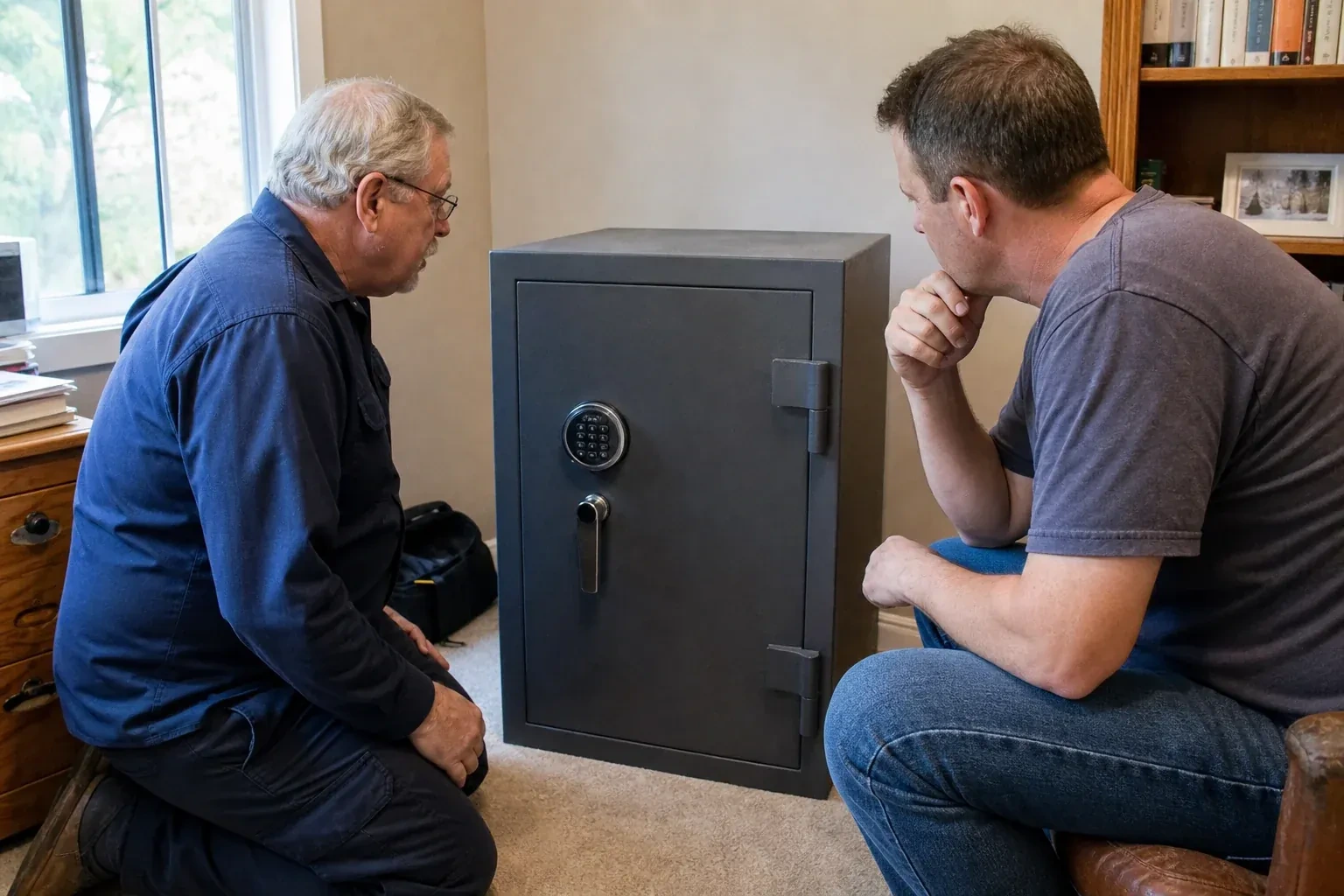
You run a home office with client files and equipment, and your insurer has asked what kind of lock is on the door. The honest answer is the builder's knob lock and a light deadbolt from when the house was new.
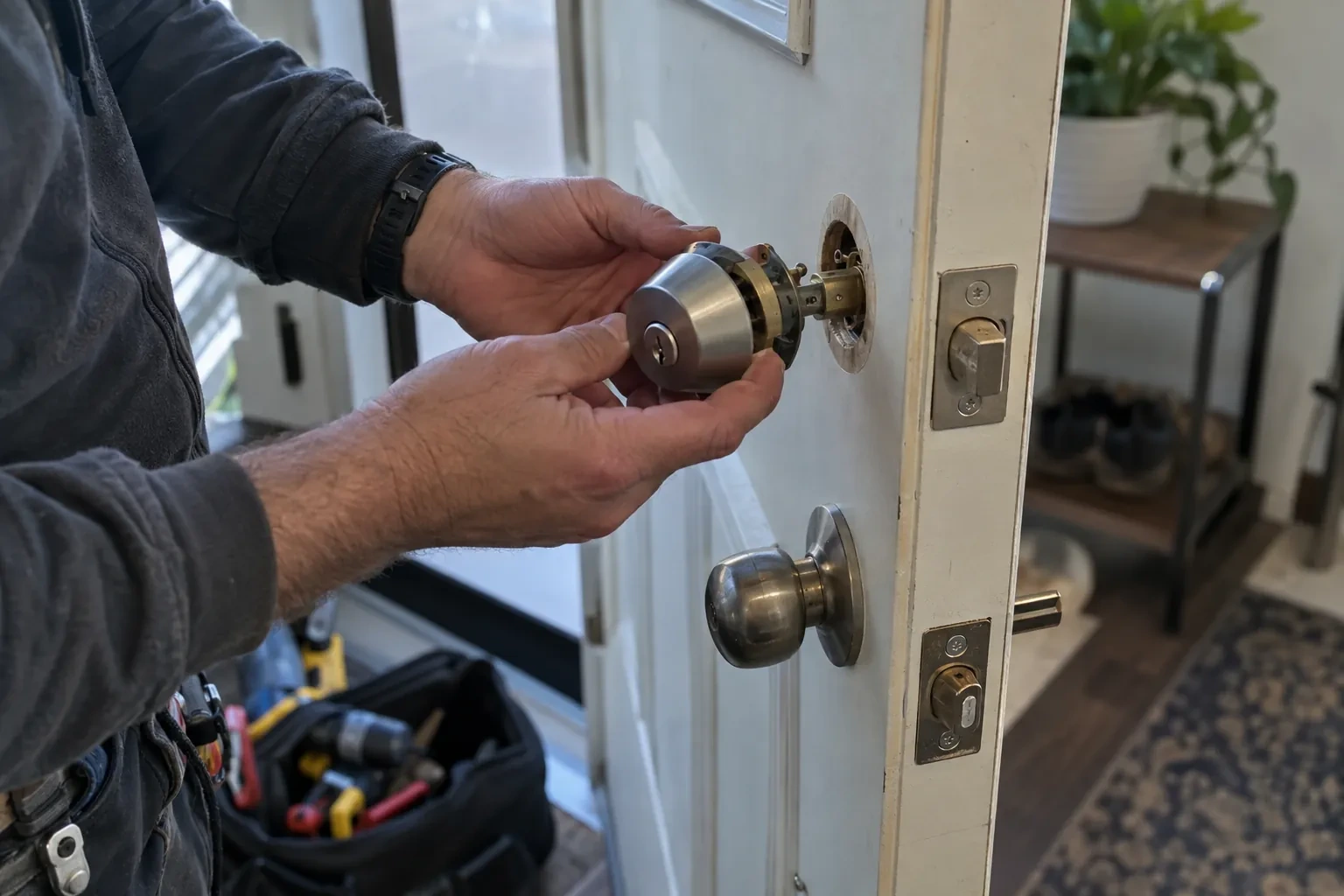
High security locks are cylinders and deadbolts designed to defeat the methods used against ordinary doors. Inside the cylinder a second locking mechanism, usually a sidebar released by finger pins or rotating pins, has to be satisfied at the same time as the normal pin stack, which is what stops picking and bumping. Hardened steel inserts stop drill bits. The bolt is thicker and carries a hardened pin against sawing, and a reinforced strike ties the lock into the wall framing. Just as important, the key is cut on a patented blank that only an authorised person can have copied, so your key count stays known.
Sound familiar?Hopkins Survey
High Security Locks · Hopkins Survey
Scene 1
A door on a farmhouse porch, a condo corridor and a shop on a busy street each see different wear. The locksmith asks how the door behaves in cold weather, whether the key has ever frozen or stuck, how many times a day it is used and whether it slams behind people. High-security cylinders with sidebars and telescopic pins are precise mechanisms and appreciate a door that closes true and a keyway kept clean. The recommendation may include a weather cover for an exposed cylinder, a closer adjustment or a hinge repair so the new hardware lives a long life.
Scene 2
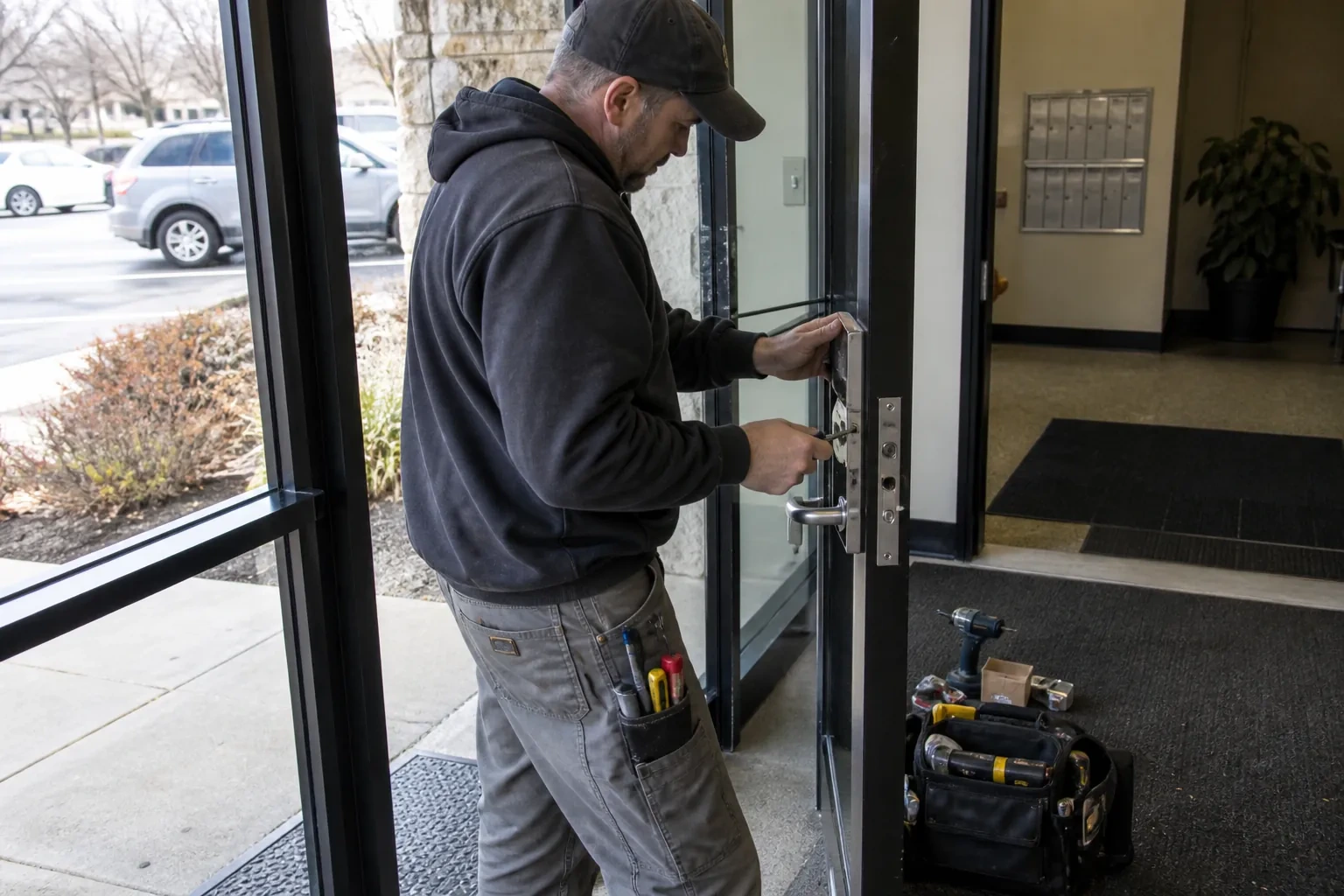
Storefront, warehouse and office doors take heavy-duty lock bodies rather than residential deadbolts. Depending on the door, that means a commercial deadbolt or mortise lock with a hardened cylinder guard, a free-spinning collar that defeats wrenches, and a laboratory-rated cylinder inside it. Narrow aluminium doors get a deadlock made for their stile. The locksmith fits the lock to the existing preparation where it is standard, adjusts the strike in the frame, and confirms that any exit device or closer on the same door still works exactly as before so people leave easily while the door holds from outside.
Scene 3
With a heavy bolt, a deep strike and long screws in the frame, the door feels different when you lock it: the bolt travels its full length and seats with a solid, quiet stop. That feel is your ongoing check. If the bolt ever starts to drag or you need to lift the door to lock it, the door or hinges have moved with the seasons and a small adjustment restores it. Wood doors swell in humid summers and shrink in dry winters; a glance at the hinge screws and the strike each spring and autumn keeps everything aligned.
What shapes the quoteBuchanan Lock Services
FeesSame any hour
The locksmith confirms that the person ordering the work is entitled to change the locks: the owner, a tenant with the landlord's agreement, or a property or facilities manager for a business. Photo identification and something linking you to the address usually settle it, and for a company a letter or a call to the named contact does the same. It protects you as much as anyone, since the same check stops someone else from changing your locks.
The mechanical resistance of the cylinder does not change, but blanks may become openly available, so copy control weakens. Manufacturers issue new patented keyways as older ones expire, and the usual answer is to move to the next generation by changing cylinders and keys while keeping the lock bodies. Your locksmith notes the patent term at handover so the date is on the calendar rather than a surprise years later.
An authorised person contacts the locksmith who holds your system, quotes the system reference, and the key is cut from code and numbered into the register. Some systems use a physical authorisation card, others an online validation, and business systems often require a signature that matches one on file. The key is collected or delivered, and the record shows the new total. It is deliberately not something a stranger with your key can do.
HamiltonOntario
High Security Locks · Hamilton, Buchanan, Central, Chedoke Park, Cootes Paradise, Corktown, Hamilton Beach, Hopkins Court, McDonald Court, North End, University Gardens, Waterdown, West Hamilton, Westdale, Pleasant View Survey
Every square is one home in a hundred.
On-site assessment
You run a home office with client files and equipment, and your insurer has asked what kind of lock is on the door.
(289) 203-1527, open 24/7.
On-site assessment preferred · (289) 203-1527, open 24/7