Skip to content
BuchananLock ServicesOpen 24/7 (289) 203-1527
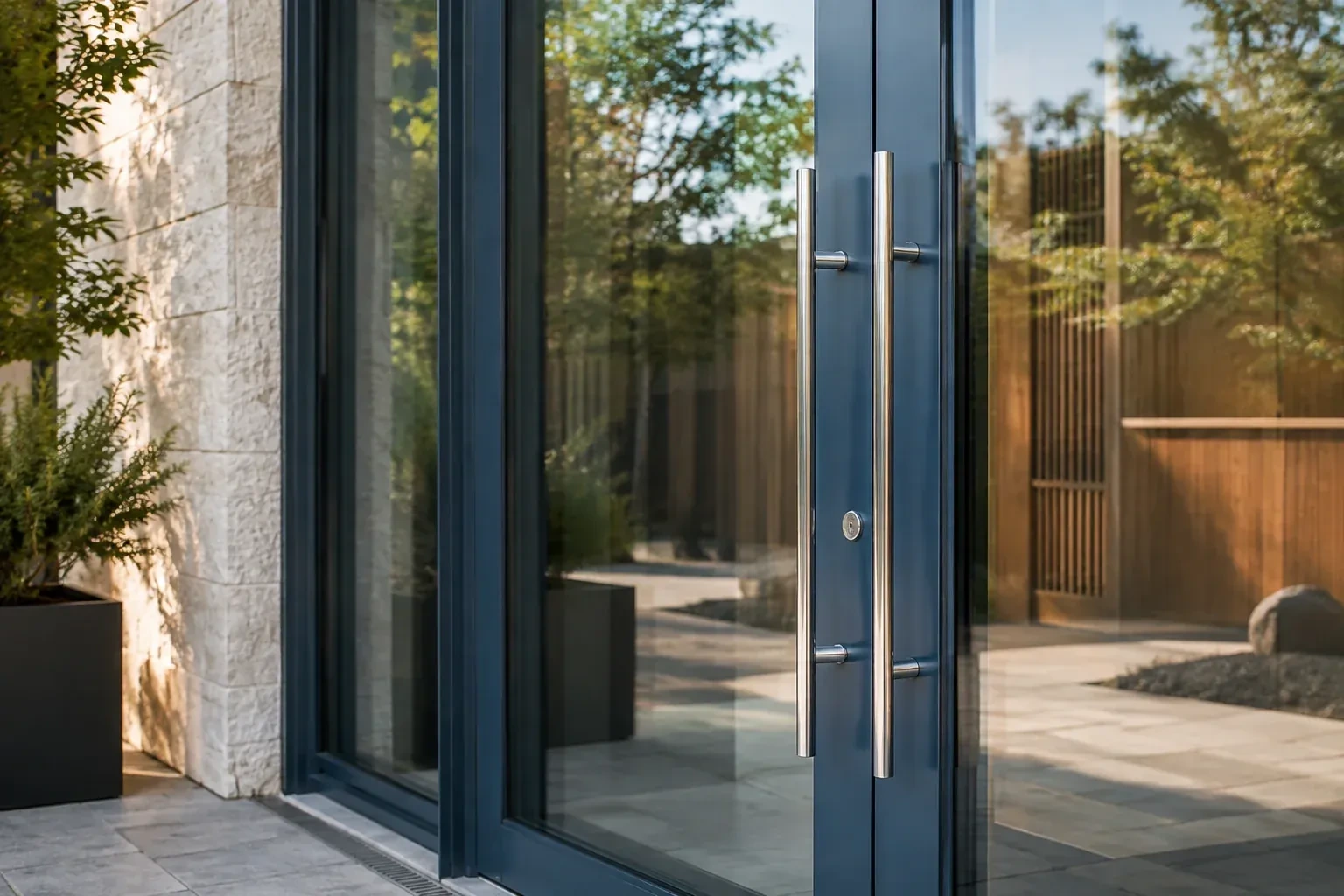
Dark-framed glass entrance doors with long silver-colored vertical pull handles and a round keyhole. — Business Lockout Service, Westdale

Lockouts · Westdale

Business Lockout Service

After last night's power flicker the card reader beside the clinic door shows nothing. Fobs do nothing, the electric strike stays locked, and the small brass override key that came with the system is in a desk drawer on the far side of the door.

In plain words

Businesses are locked out by people as often as by hardware. A keyholder is away, a former employee still has a key, a master key has gone missing, or the only spare lives in a drawer behind the locked door. A business lockout deals with the door in front of it and then with the pattern behind it. Cylinders can be rekeyed or removable cores swapped so an unreturned key becomes useless, new keys are cut and recorded against named holders, and a second keyholder or a lockbox is set up so that one absence never again closes the business for a morning.

Sound familiar?Westdale

The call
It is ten to nine, three staff are on the sidewalk with their coffees, and the key that has opened the glass front door for six years will not turn. The cylinder feels gritty, the door is locked, and the first customer is already parking.
NextHow the visit goes

Business Lockout Service · Westdale

How the visit goes

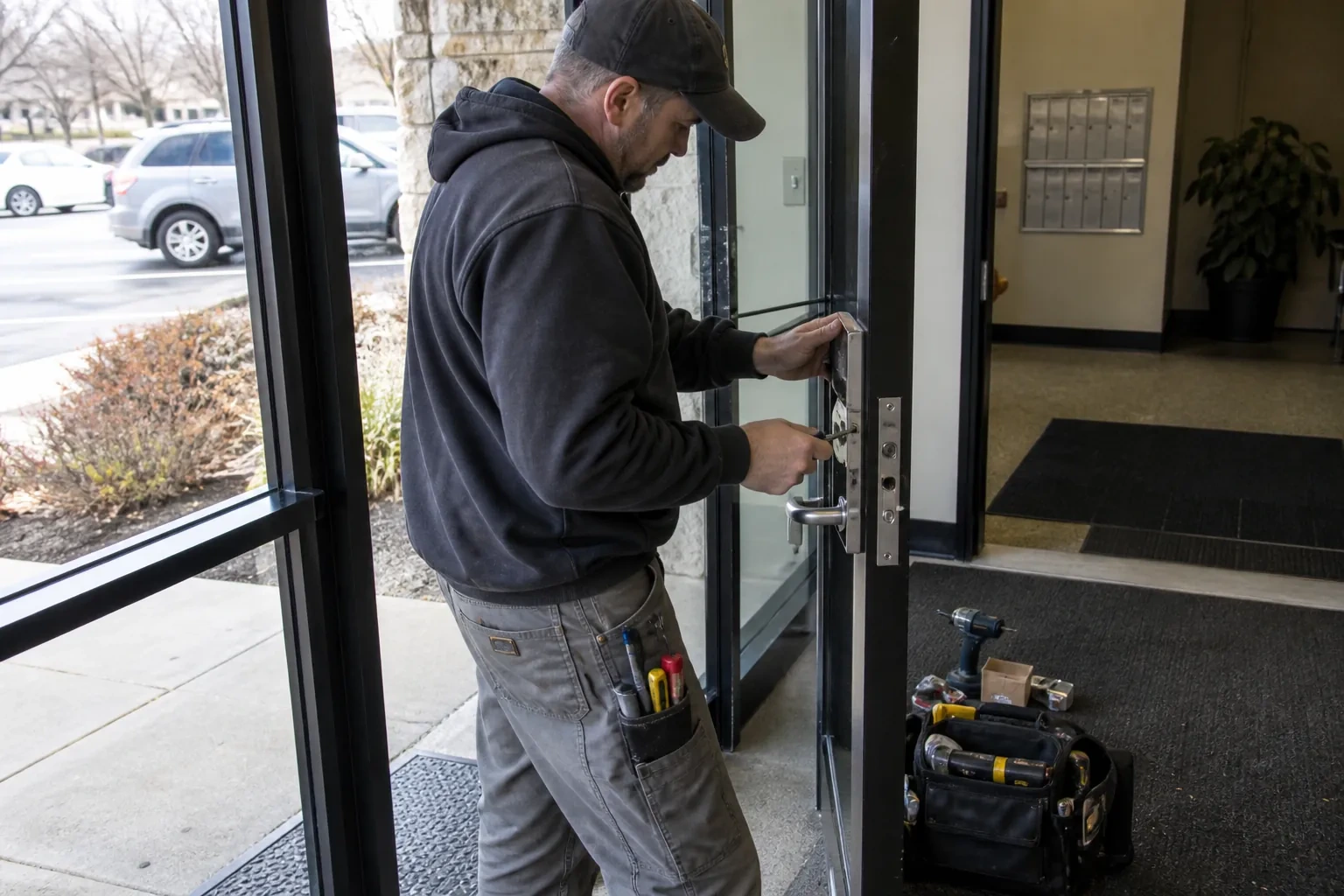
Technician in a cap and hooded sweatshirt using a small screwdriver on the lever handle and lock case of a glass door. — Westdale
  1. Scene 1

    How the door hangs and closes

    Commercial doors are heavy and busy, so the locksmith reads the door as carefully as the lock. A glass door is checked at its pivots or continuous hinge for drop and play, and at the threshold for scrape marks that show it has sagged. The closer is checked for a slow or stiff sweep that leaves the door short of the strike. The gap along the lock edge tells whether the bolt is entering its pocket square or catching its lip. A hand on the door while the key is turned often reveals that the bolt is bound rather than the cylinder failed, which changes the fix from lock work to lifting and adjusting the door.

  2. Scene 2

    Making an unreturned key useless

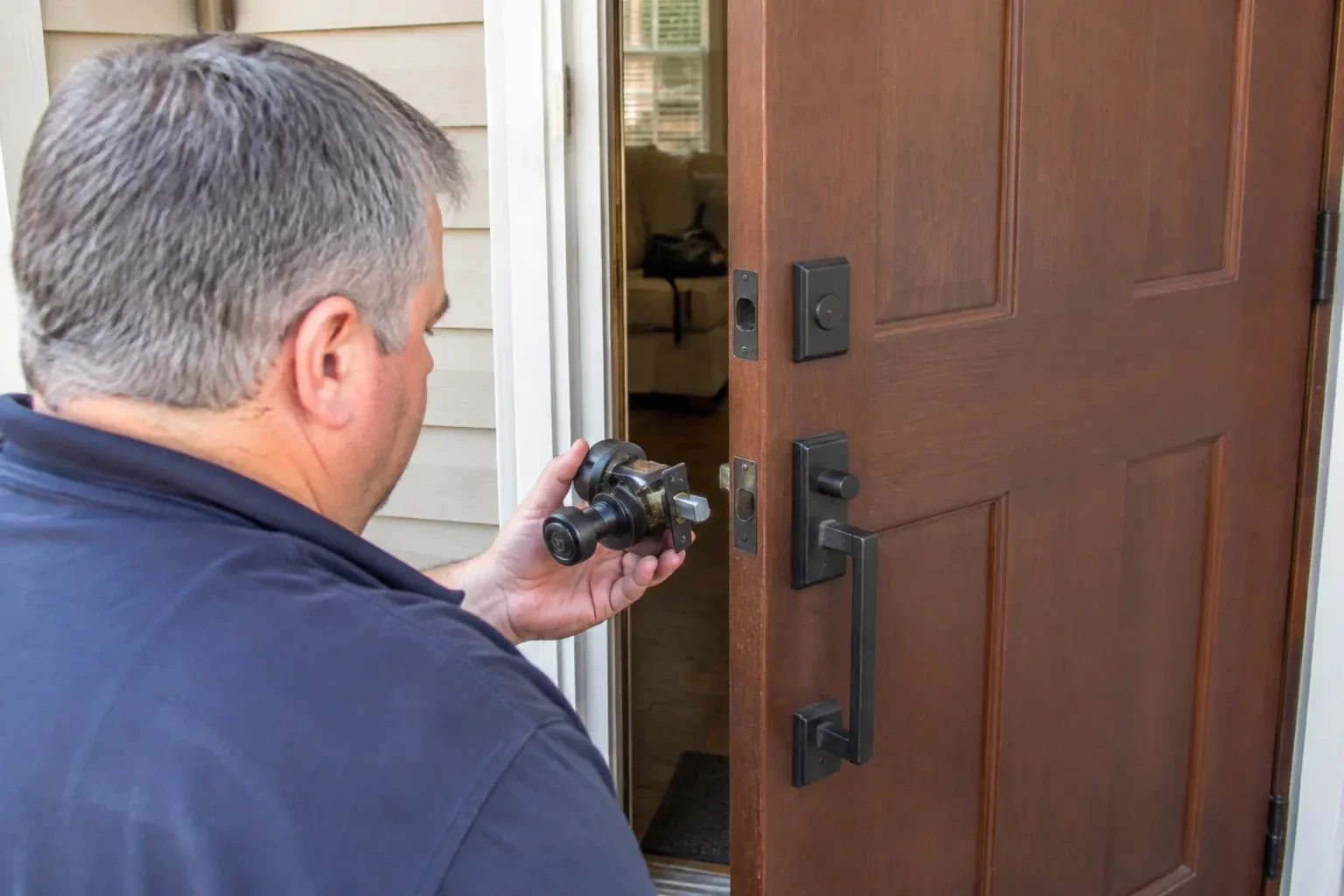
    When a key is lost or unreturned, the second half of the visit is rekeying. Mortise and rim cylinders are removed, the plug slid out with a follower, and the bottom pins changed to a new combination so a fresh key operates them and the old one turns nothing. Where the building uses interchangeable cores, the core is swapped for one on a new combination. Cylinders that shared the old key are brought onto the new one, and if the door sits within a master key system the change is planned with the property manager so building keys keep working. New keys are cut, tested in every door and recorded against named holders.

  3. Scene 3

    Ready for the rest of the winter

    A storefront cylinder that froze is handed back dried, cleaned of salt and dressed with a dry lubricant that sheds moisture instead of trapping it. A tube of lock de-icer for the opening manager's coat pocket and a keyhole cover on the most exposed door are small habits that carry a business through a season of freeze and thaw. The closer is adjusted for cold weather so the door still latches when the fluid thickens, and the threshold is checked for the ice ridge that forms where slush is tracked in. If the same door freezes every year, a weather-shielded cylinder or a small vestibule heater is worth a conversation.

In the van

  • Commercial pick and tension tools
  • Replacement mortise and rim cylinders
  • Storefront deadlock and deadlatch bodies
  • Broken key extractors
  • Cylinder decoder and plug spinner

What shapes the quoteBuchanan Lock Services

Master key system changes
Where the door belongs to a building-wide master key system, changing it means planning with the property manager and pinning cylinders so both your key and the building key still work, which is more careful work than a single rekey.
How many doors are involved
One front door is the simplest visit. A front door, a rear exit device, a roll-up padlock and a cash office add hardware to open and, often, cylinders to key alike afterwards.
Distance and access to the door
Travel is part of every call-out, and so is reaching the door: a plaza unit at street level, a suite behind a locked lobby, or a loading dock at the back of an industrial park each take a different amount of the locksmith's time.

FeesSame any hour

Have it ready

Before you call · 0 / 3

(289) 203-1527

What to expect, answered

Will opening our glass storefront door damage it?

In almost every case the door, the glass and the lock are untouched. The mortise cylinder in the narrow stile is picked or decoded so the cam turns exactly as it would for your key, and the hookbolt or latch withdraws. Drilling comes up when a cylinder has seized, is packed with a broken key, or its security features and condition rule out a clean non-destructive opening, and if it comes to that you hear about it first and a new cylinder goes in during the same visit.

We have lost a master key. Is that different from losing an ordinary key?

Yes, because a master key opens every lock in its group, so one missing key touches many doors. The response is planned rather than rushed: the locksmith maps which cylinders the key operated, works with the property manager if the system is building-wide, and re-pins or swaps cores across the group so a new master takes over. Manufacturers' guidance on key control treats retrieving and tracking master keys as the foundation of the whole system.

Can you also deal with the back door, the roll-up shutter and the gate?

Yes. A business lockout covers every opening the premises relies on: the rear service door with its exit device, a roll-up shutter and its padlock, the compound gate, a mailbox in the lobby and interior doors such as the cash office or server closet. Mention each one when you call so the right padlock shackles, cores and cylinders are in the van, and so cylinders that should share a key are handled together.

Westdaleinformation

HamiltonOntario

Town
Westdale, Hamilton
In business
15 years
Hours
Open 24/7
Nights, weekends and holidays, same fees
Visits
On-site assessment preferred. Request a visit or call.

2021 census: what it means at the door

Every square is one home in a hundred.

  • 61 in 100 homes · older homes
  • About 61% of homes in Hamilton were built in 1980 or earlier, according to the 2021 Census.Older housing means older frames. Wood that has settled for years leaves strikes slightly out of line, so a bolt drags or needs a lift of the handle. A locksmith expects this and brings the shims, longer screws and strike plates to correct it.
  • Single-detached houses make up about 56% of homes in Hamilton (2021 Census).Where housing types are mixed, the same lost-key call means different things. In a house, rekey every door on the property. In an apartment, rekey the suite door and check with management about the common entrance. The locksmith asks which it is first.

Source: Statistics Canada, Census Profile

Open Westdale in Google Maps

On-site assessment

Request a visit.

After last night's power flicker the card reader beside the clinic door shows nothing.

(289) 203-1527, open 24/7.